

Silicone vs Adjustable Metal Rings for Active Men
If I’m active, I’d use silicone for safety and adjustable metal for looks and daily wear. That’s the short answer.
Here’s why: silicone rings are soft, light, non-conductive, and made to tear under force. In one study, silicone rings failed at about 53 N, while metal rings failed at about 495 N. That makes silicone the safer pick for lifting, job sites, electrical work, hiking, and other high-movement use. Adjustable metal rings look sharper, last longer, and let me change fit when my fingers swell, but they still carry snag and conductivity risk.
What this article covers:
- Comfort: soft flex vs firmer feel
- Safety: breakaway silicone vs rigid metal
- Fit: stretch vs manual size change
- Durability: 1 to 3 years for many silicone rings vs years of metal wear
- Care: easy soap-and-water cleaning vs metal upkeep
- Style: sporty and casual vs polished and dress-ready
- Cost: about $15–$40 for silicone, about $80–$150 for silver/vermeil adjustable metal, and about $990–$1,390 for solid 14K gold
Quick Comparison
| Factor | Silicone Ring | Adjustable Metal Ring |
|---|---|---|
| Best for | Gym, work sites, outdoor use, electrical work | Office, daily wear, formal settings |
| Safety if snagged | More likely to tear first | More likely to stay rigid |
| Conductivity | Non-conductive | Conductive |
| Feel on finger | Light, soft, flexible | Firmer, heavier |
| Swelling | Stretches with the finger | Can be loosened or tightened |
| Lifespan | Often 1–3 years | Can last many years |
| Look | Casual, sporty | Clean, polished |
| Price | $15–$40 | $80–$150+, or $990–$1,390 for solid gold |
If you want one simple rule, here it is: use silicone when your hands face risk, and use adjustable metal when style matters more than activity exposure.
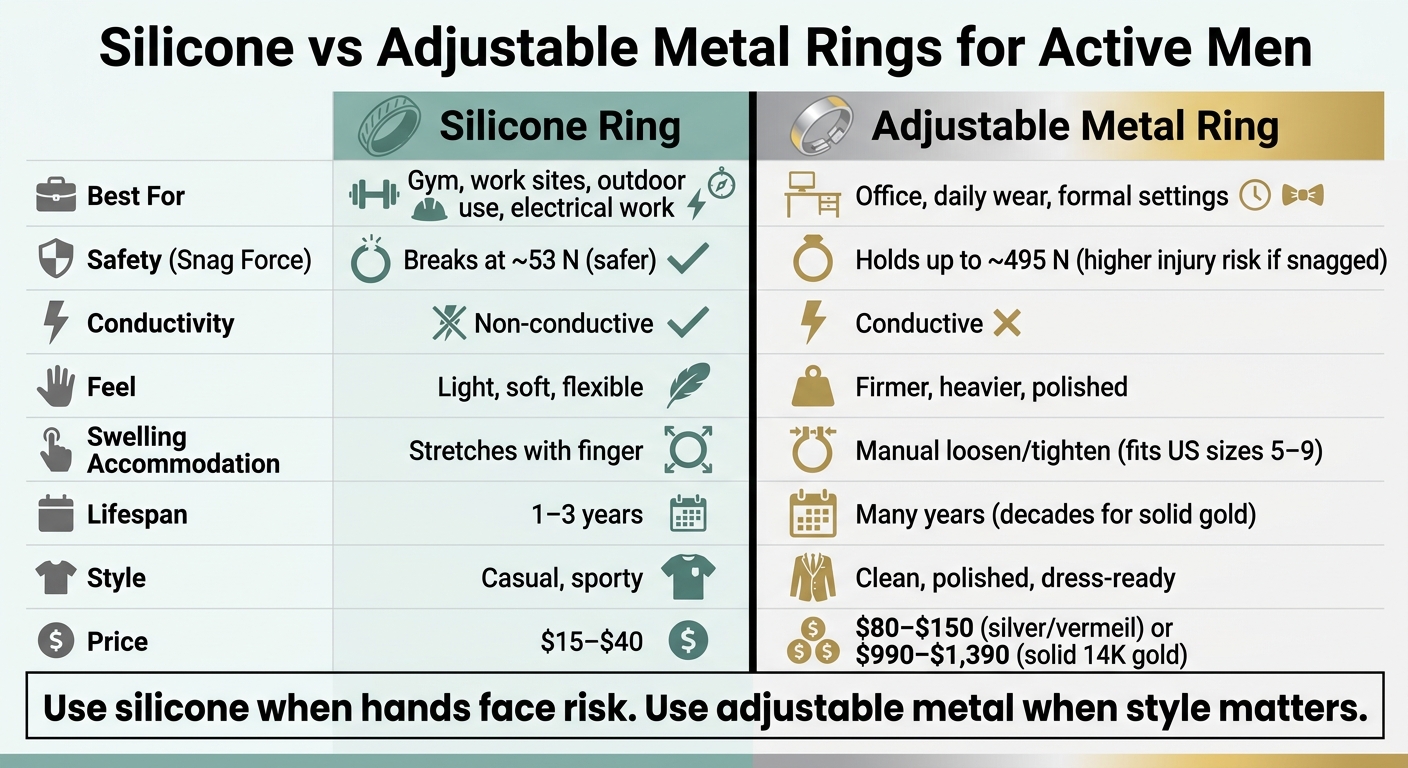
Silicone vs Adjustable Metal Rings: Active Men's Quick Comparison Guide
Silicone Rings: Safety, Sweat Resistance, and High-Movement Use
Comfort and Safety During Workouts and Hands-On Jobs
For active wear, silicone has one big edge: it bends with your finger instead of pushing back. These rings are light, soft, and easy to compress, so they move with you. That can mean less pinching during lifts, fewer hot spots on pull-ups or rowing, and less pressure when your fingers swell on a long ride.
The biggest plus is safety. Silicone is non-conductive, which matters if you work around live electrical circuits. A metal ring can connect a live contact to ground and lead to arc flashes or burns. Silicone doesn’t carry current, so it’s a much safer pick in that kind of setting.
Another big safety point is how silicone fails under load. A 2021 biomechanical study found that silicone rings failed at an average of 53 N of force, while metal rings failed at 495 N - about one-tenth as much. That difference matters if a ring gets caught on a pull-up bar, a machine guard, or a ladder rung. In that case, the silicone band is more likely to tear before most of that force gets to the finger. The same study reported no degloving injuries in the silicone ring group.
Still, silicone isn’t magic. If you’re around heavy rotating machines or industrial presses, the safest move is still to remove any ring at all. Silicone helps cut risk, but it doesn’t replace workplace safety rules.
Durability, Cleaning, and Drawbacks of Silicone
Silicone does well with sweat, water, and grime. It’s non-porous and waterproof, so moisture stays on the surface instead of soaking in. That also makes cleanup simple: rinse it with warm water and mild soap after sweaty workouts, dirty jobs, or time outdoors.
The downside is wear. Silicone doesn’t last as long as metal. Based on how active you are and the ring’s build, a silicone ring worn every day usually needs replacement in 1 to 3 years. Stretching it over large knuckles again and again, scraping it on sharp edges, or constant bending can make the band thin out or tear. Better-grade silicone lasts longer, but it still won’t stay with you for decades the way a metal band can.
There’s also the look. Silicone has a casual, sporty, work-first style. That fits the gym, the garage, or a job site just fine. But at a client meeting or formal event, it can feel a little out of place. So if you want one ring to go from deadlifts to dress shoes, silicone alone probably isn’t enough. Most active men treat it as a separate ring for training or hands-on work - simple, lower-cost, and easy to swap out when it wears down.
That tradeoff is where adjustable metal rings become the stronger alternative.
sbb-itb-9da40c1
Adjustable Metal Rings: Style, Fit Flexibility, and Daily Wear
Fit Changes, Daily Comfort, and Classic Appearance
If silicone stands out for safety, adjustable metal stands out for style and fit range.
Hands don’t stay the same size all day. They can swell during workouts, in hot weather, or over long shifts. An adjustable metal ring helps with that because it can loosen or tighten instead of forcing you into a new size. Most adjustable metal rings cover about US sizes 5–9, so the same ring can handle swelling from gym sessions, hikes, cycling, or manual work. That also makes it easier to get the ring over the knuckle and keep it sitting more securely at the base.
Metal also has a cleaner, more polished look than silicone. It tends to work better for the office, dinner, and events where you want something a bit more refined. You’ll also find these rings in sterling silver, 14K gold, and titanium. So if you need one ring that can go from work to social plans without feeling out of place, adjustable metal usually makes more sense.
Durability, Care, and Activity Limits
Metal tends to last longer than silicone, and a well-made adjustable ring can keep its shape even with frequent size changes. Solid 14K gold keeps a more consistent finish over time. By contrast, plated or vermeil rings can wear down enough to show the base metal underneath, which may shift the color. Prices usually run from about $80 to $150 for silver or vermeil, and about $990 to $1,390 for solid gold.
There is a tradeoff, though. Metal works best in lower-risk settings. It’s not a good match for climbing, construction, or other snag-prone work. For most people, the smart move is simple: wear adjustable metal for daily use, then take it off before activities where it could catch or get pulled.
Silicone vs Adjustable Metal Rings: Side-by-Side Comparison
Comfort, Safety, and Fit During Movement
The simplest way to tell them apart is this: silicone rings feel light and flexible when you move, while adjustable metal rings feel firmer and look more polished for day-to-day wear.
The biggest gap is safety. A hand-surgery study found that silicone failed at about 53 newtons, while metal held up to about 495 newtons. That matters in any setting where a ring could catch on equipment. Silicone is also non-conductive, which makes it the better pick for electrical work or jobs around electricity.
| Feature | Silicone Ring | Adjustable Metal Ring |
|---|---|---|
| Weight | Ultra-light, barely noticeable | Heavier, more solid feel |
| Pressure during lifting | Flexible | Firmer |
| Safety (avulsion risk) | Breaks under extreme stress | Rigid; higher risk if snagged |
| Conductivity | Non-conductive | Conductive |
| Fit when hands swell | Stretches with the finger | Adjust by opening the band |
Durability, Maintenance, Appearance, and Cost
Silicone does well around sweat, water, and dirt. But there’s a trade-off: it can tear or stretch over time. Most active users replace a silicone ring every 1 to 3 years. At $15 to $40 per ring, that’s a pretty low-cost swap.
Adjustable metal rings usually cost more at the start, but they can last for many years with proper care. Plated finishes may wear down at the adjustment point, and replating usually costs $30 to $100 per service. Solid 14K gold versions can cost $990 to $1,390 and may last for decades if cared for well.
Which Ring Works Best for Common U.S. Scenarios
Where you wear the ring most often makes the choice much easier.
- Gym lifting and CrossFit: Silicone
- Trail hiking and camping: Silicone
- Cycling (indoor or outdoor): Silicone
- Warehouse work and construction: Silicone
- Electrical work: Silicone
- Office wear and client meetings: Adjustable metal
- Formal events: Adjustable metal
Silicone Ring Vs. Metal Ring? - Jewelry Market Spotlight
Conclusion: When to Choose Silicone and When to Choose Adjustable Metal
Pick the ring based on the risk you deal with most. If safety is the big issue, go with silicone. If looks and daily wear matter more, adjustable metal makes more sense. That simple trade-off clears up the decision fast.
Silicone is the better choice when your routine includes higher-risk activity like lifting, working around machinery, electrical work, or anything else where a ring might snag. Silicone is made to break under pulling force, which lowers the risk of a serious finger injury. For active men, that safety edge matters.
Silicone wins on safety; adjustable metal wins on appearance and day-to-day wear. Adjustable metal fits better in office settings, social events, and daily use where style counts. A metal band looks sharper in a client meeting, holds up longer with regular wear, and can still deal with moderate finger swelling through a manual size adjustment.
Key Points for Making a Buying Decision
Before you buy, weigh these four things:
- Activity risk: If you spend most days around equipment, power tools, or heavy weights, choose silicone.
- Swelling patterns: If your fingers swell a lot from heat, training, or long days outside, silicone is usually the safer bet.
- Preferred look: Silicone feels casual and sporty. Metal feels classic and more dress-ready.
- Budget and lifespan: Silicone rings cost less up front but wear out sooner. Adjustable metal rings cost more at first, but they can last much longer with basic care.
For active men, the best ring is the one that fits the setting, not just the finger. Use silicone when risk is part of the day. Use adjustable metal when you want a cleaner, more polished look with some fit flexibility.
FAQs
Can I switch between silicone and metal?
Yes. A lot of active men swap between silicone and metal rings depending on the day.
Silicone rings are often the go-to for hard workouts, outdoor activities, and manual labor. They’re flexible, low-cost, and easy to wear for long stretches.
Adjustable metal rings make more sense for daily wear. They have a more polished look and hold up well over time.
Will an adjustable metal ring stay secure?
Yes - when it’s maintained the right way, an adjustable metal ring should stay secure. A well-made design is built to fit firmly and stay steady, while still allowing for normal day-to-day changes in finger size.
Details like locking mechanisms, hinges, or overlapping bands help keep the ring in place. To get the best fit, use the included resizing tools as directed and have the adjustment mechanism checked from time to time by a jeweler.
How do I know when to replace a silicone ring?
Replace your silicone ring if you notice thinning, tears, cracking, fraying, or loss of shape from daily wear.
Give it a quick check now and then, especially if it starts to feel loose, gets harder to clean, or shows surface damage that could affect how it fits or how safe it feels during workouts, lifting, or outdoor activities.


