

Silicone vs Metal Rings for Senior Comfort
If your fingers swell, ache, or change size during the day, silicone is usually the more comfortable pick. It is light, soft, and made to give way if it gets caught. Metal lasts much longer and looks more dressy, but it can feel tight, heavy, or hard to remove when knuckles are large or joints are sore.
Here’s the short version:
- Silicone is best for daily wear, chores, exercise, and days when your hands swell.
- Metal is best for formal events and people who want a more polished look.
- A size 10 silicone ring weighs about 1.5 grams, while a size 10 tungsten ring is about 15 grams.
- Nickel allergy affects about 11.4% of people in North America, Europe, and China.
- Silicone often needs replacement every 1 to 3 years.
- Metal can last for decades, but it needs more care and may be harder to remove in an emergency.
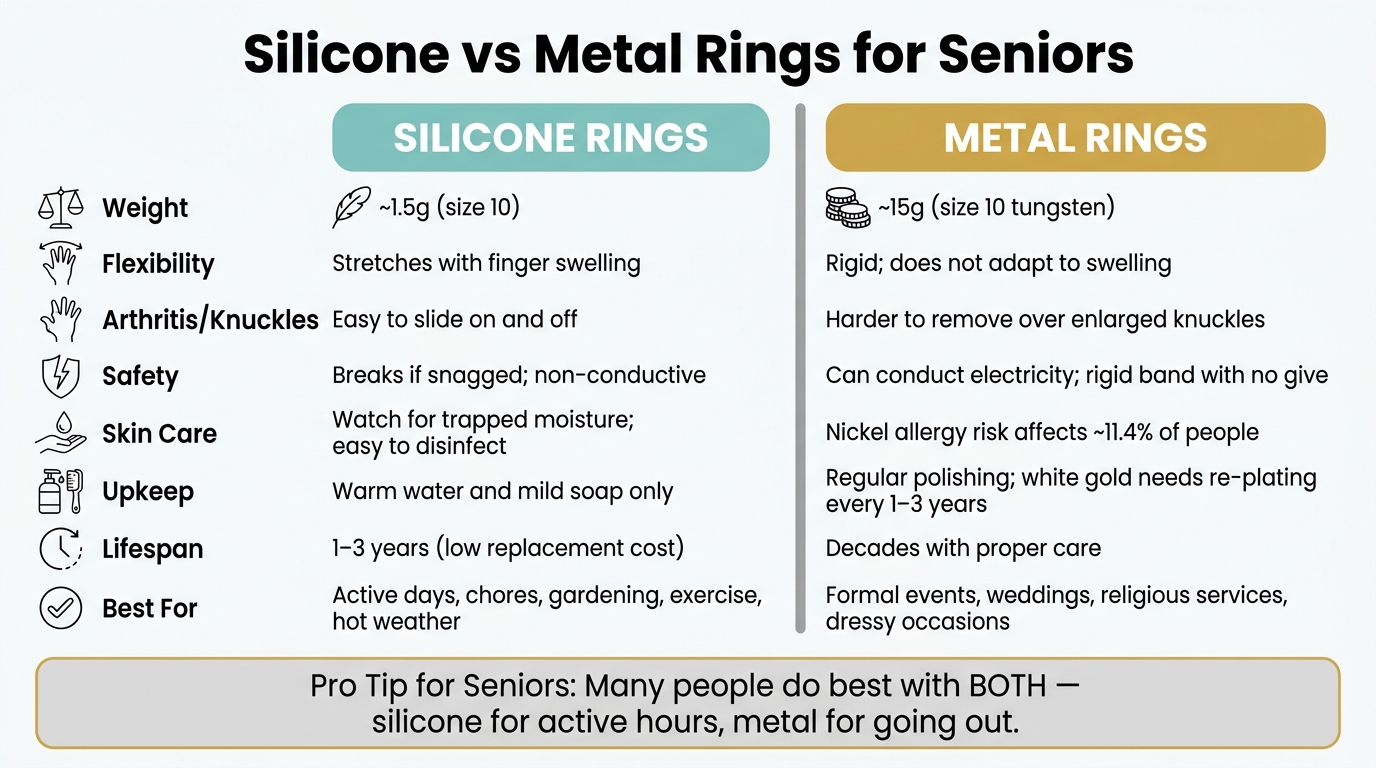
Silicone vs Metal Rings for Seniors: Comfort, Safety & Durability Compared
Metallic Silicone Wedding Rings Review
sbb-itb-9da40c1
Quick Comparison
| Factor | Silicone Rings | Metal Rings |
|---|---|---|
| Comfort | Soft and light | Firm and heavier |
| Swelling | Stretches with finger size changes | Can get tight in heat or flare-ups |
| Arthritis/kuckles | Easier to slide on and off | Harder over large knuckles |
| Safety | Breaks if snagged; non-conductive | Can catch, press, or conduct electricity |
| Skin care | Watch for trapped moisture | Watch for nickel reactions |
| Upkeep | Soap and water | Polishing; some metals need extra care |
| Lifespan | About 1 to 3 years | Often lasts for decades |
| Best use | Active days, home tasks | Dressier events, milestone moments |
My take: if comfort is your top goal, silicone wins for most day-to-day use. If you want a ring for church, family events, or a more polished look, metal still has a place. Many seniors do best with both: silicone for active hours and metal for going out.
Silicone Rings: Light, Flexible, and Safer for Active Days
For hands that swell, stiffen, or feel tender with age, silicone can take a lot of pressure off. A size 10 silicone band weighs about 1.5 grams, compared with roughly 15 grams for a tungsten ring in the same size. That gap is hard to ignore when fingers are sore or puffy. The soft edges also help cut down on chafing and pressure around tender joints during normal daily movement.
When hands ache or swell, low weight and soft edges often matter more than anything else. Silicone is made to break if it gets snagged, which lowers the risk of finger injury. That matters during gardening or exercise, where a ring can catch on a tool or piece of equipment. Silicone is also non-conductive, so it’s safer around electrical work at home.
Comfort During Swelling and Arthritis Flare-Ups
Fingers can swell in hot weather, after exercise, or during an arthritis flare-up. Silicone stretches with them. That stretch makes the ring easier to slide over a larger knuckle and more comfortable for seniors with less grip strength or dexterity. Instead of pushing back against the finger, the soft polymer gives a little and moves with it.
Cleaning, Skin Care, and How Long Silicone Rings Last
Taking care of a silicone ring is simple. Warm water and mild soap are usually enough. Skip harsh chemicals, since they can wear down the material over time.
Moisture is the main thing to watch. If water gets trapped between the ring and the skin, it can lead to irritation sometimes called ring rash. After water exposure, take the ring off and dry the skin underneath before putting it back on. Some silicone rings have vented grooves that help moisture escape. For caregiving tasks, silicone is also easier to disinfect and less likely to scratch skin.
Most silicone rings need to be replaced every one to three years, but the lower price makes that easier to live with.
Metal rings offer a different tradeoff: more weight, more structure, and a more classic look. Metal rings fit a different need, which becomes clearer in the next section.
Metal Rings: Classic Look, Heavier Feel, and Long-Term Wear
If silicone is all about flex, metal is about structure and staying power. It feels heavier on the hand and gives less when your finger moves, but it also brings that classic ring look many people still want.
Metal rings are known for durability and a timeless style. They keep their shape for decades and can build a personal patina over time. But that toughness comes with trade-offs. A rigid band can press into the skin during gripping, lifting, or cane use.
Fit Problems When Finger Size Changes
Finger size shifts more than most people think. Heat can make fingers swell. Cold can make them shrink. A metal band doesn't change with any of that.
So on a warm afternoon or during a flare-up, a ring that felt fine earlier can start to feel painfully tight.
A rigid metal band can become painfully tight on a swollen finger and may need emergency removal.
Arthritis can make fit even harder. Enlarged knuckles may make it tough to slide a ring over the joint, even if the band fits the base of the finger well. Some metals can be resized, but tungsten cannot and must be replaced if the fit changes.
Satinski also offers adjustable sterling silver and 18K gold rings with hidden sizing mechanisms that expand or contract across sizes 5–9.
Safety, Skin Sensitivity, and Upkeep
Metal reacts fast to temperature, so it can feel hot or cold against the skin. It also brings a serious safety issue around electricity. If it touches a live circuit, it may complete that circuit and cause severe burns.
Skin reactions matter too. Nickel, which is used in many metal alloys, including some white gold blends, triggers contact dermatitis in roughly 11.4% of people across North America, Europe, and China. And skin can get more reactive with age. That means a ring you wore for years without trouble might suddenly start causing redness or itching.
Care is another part of the deal:
- Gold and silver need regular polishing to stay bright.
- White gold needs professional rhodium re-plating every one to three years to keep its color.
- Platinum handles scratches a bit better because it displaces rather than loses metal, but it still does best with occasional professional cleaning.
Put simply, metal asks for more upkeep than silicone.
Those trade-offs hit hardest when a ring has to deal with swelling, chores, and day-to-day wear.
Silicone vs Metal Rings: Side-by-Side Comparison
This comparison narrows the decision to what matters most: comfort, safety, upkeep, and wear time. Silicone is lighter and bends with your finger. Metal feels heavier and stays firm. For seniors, the better pick often comes down to swelling, daily chores, and how often the ring needs to come off.
Weight, Pressure, and Fit During Swelling
A rigid metal band can start to feel tight when fingers swell. It can also be tougher to slide over large knuckles.
Use this summary to match the ring to home tasks, errands, and special occasions. The table below makes the trade-offs easy to scan.
| Comfort Factor | Silicone Rings | Metal Rings |
|---|---|---|
| Weight | Very light | Noticeably heavier, especially in wider bands |
| Pressure on joints | Flexible and more forgiving | Rigid and less forgiving |
| Fit over knuckles | Stretches more easily | Harder to remove over large knuckles |
| Comfort during swelling | Adapts to finger-size changes | Can become tight during heat or activity |
| Care | Warm water and mild soap; no professional upkeep | Needs regular polishing; white gold requires re-plating every one to three years |
Safety, Style, and How Long Each Ring Lasts
For fit changes, Satinski offers adjustable sterling silver and 18K gold rings in sizes 5–9.
| Use Factor | Silicone Rings | Metal Rings |
|---|---|---|
| Safety | Breakaway safety feature | Rigid band with less give |
| Style | Casual, practical look | Classic look for special occasions |
| Best use case | Active days and home tasks | Traditional wear and dressier events |
| Durability/Lifespan | Needs replacement every one to three years | Keeps its shape for decades |
In plain terms, the choice isn't just about looks. It's about how the ring feels on an average day - when you're doing chores, heading out for errands, or getting dressed for something a bit nicer.
Which Ring Type Works Best for Daily Life
These trade-offs show up most in day-to-day wear. The right pick usually comes down to what you do, whether your fingers swell, and when you plan to wear the ring.
When Silicone Is the Better Choice
Silicone is often the better pick for busy days filled with chores and errands. If you spend time gardening, cleaning, or working out, a silicone ring tends to feel easier to wear. It bends, weighs very little, and is less likely to become annoying or create a safety issue.
It can also be a better match if arthritis or heat makes your fingers swell. And because silicone rings are low cost, replacing one after wet or messy tasks usually isn't a big deal.
When looks matter more than flexibility, metal is often the better route.
When Metal or Adjustable Metal Is the Better Fit
Metal rings tend to work best for weddings, religious services, family gatherings, and dressy occasions. A sterling silver or gold band fits those moments well and gives a more polished look.
The catch is fit. If your fingers swell during the day, a fixed metal band may feel fine in the morning and too tight by afternoon. That's where adjustable metal rings can help. They give seniors the look of metal with a fit that has a bit more give. Satinski offers adjustable rings in sterling silver and 18K gold from $70, sized 5–9.
That leaves a pretty simple choice: comfort for daily wear or structure for formal wear.
Conclusion: Match Your Ring to Your Comfort Needs and Daily Routine
For many seniors, the smartest move is to have both. Keep a silicone band for active hours, then switch to a metal or adjustable metal ring for outings and special occasions.
Silicone stands out for flexibility and safety. Metal stands out for longevity and tradition. If your fingers swell or you use your hands a lot, silicone is usually the better fit. If you want a formal look and a steadier fit, go with metal or adjustable metal.
FAQs
Which ring is better for swollen fingers?
For swollen fingers, silicone and adjustable rings can work better than fixed metal bands.
Silicone rings stretch as your fingers swell during the day, so they don’t add extra pressure. Satinski’s adjustable rings are a more permanent pick. They expand and contract for a secure, comfortable fit, while still giving you the look of sterling silver or 18K gold.
Can I wear a metal ring with arthritis?
Yes - if you pick a design built for comfort and easy adjustment.
Fixed-size metal bands can start to feel tight or even painful when your fingers swell. That’s the big downside. Adjustable metal rings, including some from Satinski, can better handle day-to-day size changes and ease pressure.
If you have sensitive skin, go with hypoallergenic metals like sterling silver or 18K gold. In some cases, medical-grade metal ring splints may also help support the joints.
Should I own both silicone and metal rings?
Yes. Owning both gives you the right ring for different situations.
A metal ring gives you a polished look for daily wear, work, and formal events. A silicone ring is light, practical, and safer for workouts, manual labor, outdoor jobs, or those times when your fingers swell and a hard ring just doesn’t feel good.


