


Trigger Finger and Rings: Comfort Strategies That Work
If trigger finger makes your ring hurt, the fix is usually simple: wear a ring that puts less pressure on the base of your finger, stop wearing it on swollen days, and remove it as soon as it feels tight.
I’d boil the whole article down to this: fit comes first, design comes second, and daily habits matter every day. Trigger finger often causes pain, stiffness, clicking, and locking near the ring line. That means a ring that felt fine at 8:00 a.m. can feel too tight by afternoon, especially after gripping, exercise, heat, or hand use.
Here’s the short version:
- Choose a ring that can handle swelling, especially if your finger size changes during the day
- Check fit when your finger is at its largest, not only when it feels fine
- Pick smooth, low-profile designs that don’t rub, snag, or dig into sore spots
- Use sizing aids only for a slightly loose ring, never for a snug or swollen finger
- Take the ring off early if you notice pressure, deep marks, numbness, color change, or trouble bending the finger
- Get urgent help if the finger turns pale, blue, blotchy, cold, numb, or very painful
A few facts stand out. The article points to cooling the hand for 10 to 20 minutes for mild swelling before trying to remove a ring. It also notes that trigger finger symptoms often feel worse after rest, which is why a ring can feel much tighter the next morning than it did the night before.
Quick comparison
| Option | Best for | Main upside | Main risk |
|---|---|---|---|
| Fixed-size ring | Finger size stays about the same | Simple daily wear | Can feel tight during flare-ups |
| Adjustable ring | Finger size changes through the day | Loosen or tighten at home | Can still press if set too snug |
| Custom-resized ring | Long-term wear after fit patterns are clear | Better comfort if sized well | Won’t change with daily swelling |
One more point: these steps may help comfort, but they do not treat trigger finger itself. If catching, locking, swelling, or pain keeps coming back, it’s time to talk with a health care professional.
This article lays out the ring choices, design details, wear habits, and warning signs I’d want to know before putting a ring back on a sore finger.
sbb-itb-9da40c1
Choose a Ring That Can Adjust to Finger Swelling
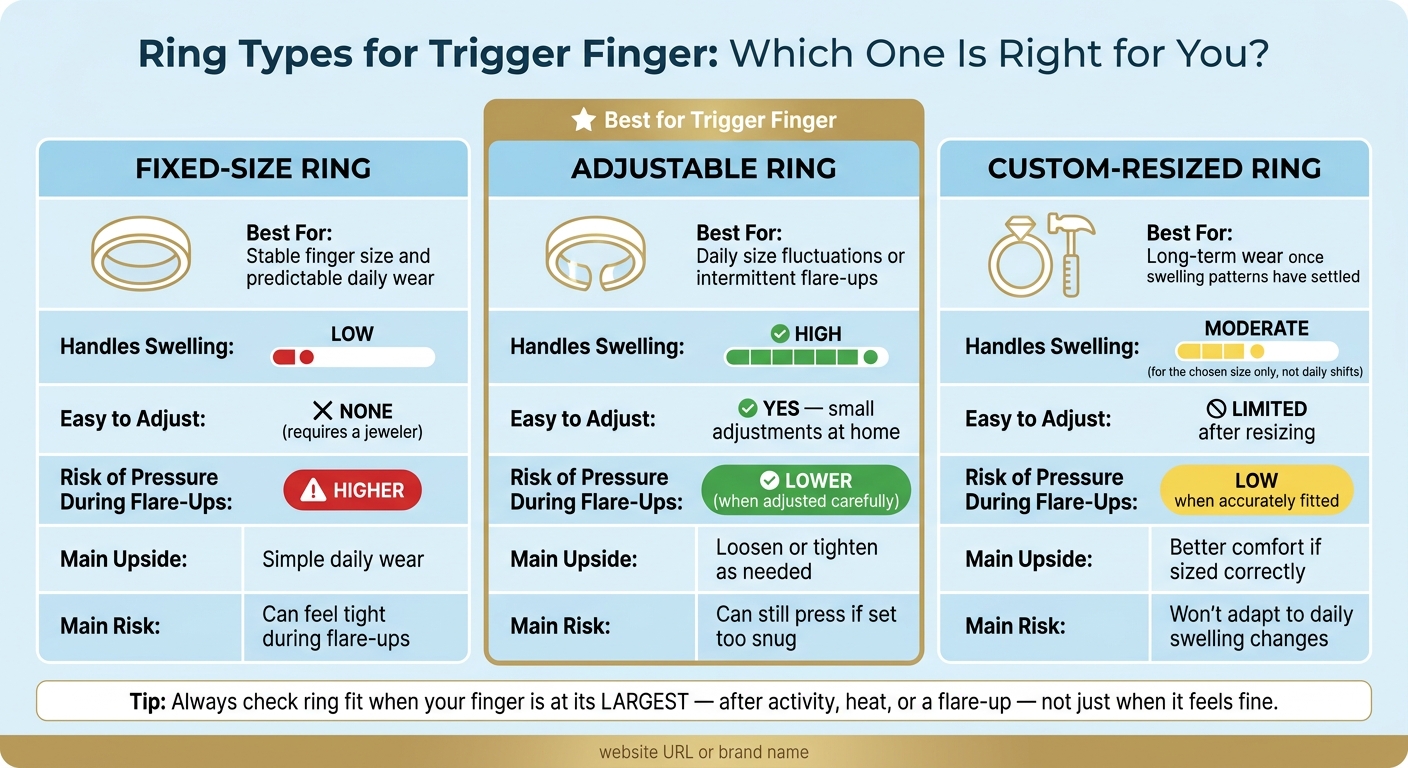
Ring Types for Trigger Finger: Which One Is Right for You?
When your finger size changes during the day, the ring itself matters just as much as the look. A fixed band can start out fine in the morning and feel too tight later on. That’s why it helps to pick a ring that can handle swelling instead of fighting against it.
Adjustable, Fixed-Size, and Custom-Resized Rings: Which One Fits Your Needs
Each type deals with swelling in a different way. The best pick comes down to how much your finger size shifts from one day to the next.
| Ring type | Handles swelling | Easy to adjust | Risk of pressure during flare-ups | Best use case |
|---|---|---|---|---|
| Fixed-size | Low | None without a jeweler | Higher if swelling increases | Stable finger size and predictable daily wear |
| Adjustable | High within its range | Easy; small adjustments at home | Lower when adjusted carefully | Daily size fluctuations or intermittent flare-ups |
| Custom-resized | Moderate for the chosen size, not for daily shifts | Limited after resizing | Low when accurately fitted | Long-term wear once swelling patterns have settled |
If your swelling comes and goes, adjustable rings are usually the better fit. You can loosen or tighten the band a little as needed, which helps avoid pressure while still keeping the ring secure at the base of your finger.
If you go with custom resizing, tell your jeweler that you have trigger finger. That way, the final size can be based on what feels comfortable when your hand is swollen, not just when your finger is at its smallest or biggest.
How to Check Ring Fit Without Adding Pressure
After you choose a ring type, test the fit in normal life conditions, not just when your hand feels fine. Check it when your finger is at its largest - often later in the day, after activity, or during a mild flare-up.
Put the ring on, then bend your finger and make a gentle fist. It shouldn’t pinch at the base or limit movement. A ring that fits well should not cause increasing pain, numbness, tingling, discoloration, clear indentations, or trouble removing it.
It’s also smart to check the fit again after:
- Hot or humid weather
- Exercise
- Travel
- Long periods of hand use
- Any stretch of added stiffness or swelling
If the ring keeps feeling tight at the same times or after the same activities, that’s a useful pattern. It tells you when to adjust the fit before pressure starts building.
Reduce Irritation by Choosing Low-Profile Ring Designs
Once the size is right, the shape still has work to do. A ring can fit well and still bother a tender finger. Rough edges, high settings, and bulky details often cause the trouble.
Ring Design Features That Put Less Stress on a Tender Finger
Start with the inner surface. Before you buy, run a fingertip along the inside of the band. If you feel a rough seam, an exposed prong, or a hard ridge, that spot can press right into the base of your finger. A smooth, rounded inside edge cuts down on those pressure points and also helps the ring slide on and off more easily.
The outer edges matter too. Bands with softly rounded or beveled edges are less likely to dig into the next finger or catch on clothing during everyday use. Sharp edges can also press against nearby fingers each time you make a fist, which adds friction to a spot that may already be sore.
Then there’s setting height. A tall stone or high prong can snag on sleeves and push into neighboring fingers. A bezel setting, a flush-set stone, or a low-set design with protected prongs keeps the ring closer to the finger and less in the way. When you’re checking a setting, slowly close your hand and see if any part of the ring presses into another finger or pushes the sore finger into an awkward position.
Band width plays a part as well. A narrow-to-moderate band often feels lighter and gives your finger more room to bend.
Here’s the quick takeaway:
| Design feature | Comfort benefit | Watch out for |
|---|---|---|
| Smooth rounded inside edge | Reduces pressure points; easier to remove | Still needs to fit comfortably overall |
| Rounded outer edges | Less rubbing against adjacent fingers; fewer snags | Needs to sit securely without sharp contact points |
| Low-profile or bezel setting | Less snagging; less interference with gripping and typing | Must still protect the stone securely |
| Narrow-to-moderate band width | More room for finger flexion; less side pressure | A very narrow band can concentrate pressure if it fits snugly |
These design choices cut down on rubbing and pressure. On flare-up days, temporary sizing tools can also give short-term relief without changing the ring itself.
Using Temporary Sizing Tools and Safe Wear Habits
If a ring fits well on most days but feels wrong during flare-ups, temporary tools and a few simple habits can take some pressure off.
When Ring Adjusters and Sizing Aids Can Help
Use a temporary sizing aid only when the ring is slightly loose or spins with normal movement. If the ring already feels snug, the finger is swollen, or the base of the finger is tender, skip it.
Options include:
- clear silicone or plastic adjusters
- low-profile sizing coils
- jeweler-installed sizing beads or a liner
The goal is simple: the loosest fit that still stays in place without leaving deep marks. After adding any aid, flex your finger and pay attention. If clicking, tenderness, stiffness, pressure, or skin marks get worse, take it off.
Check the skin after a short wear, then again later. Watch for redness, indentation, blistering, numbness, or more swelling. Remove the aid on a regular basis so you can wash and dry both the ring and your finger. If the aid gets rough, sticky, cracked, or hard to clean, replace it.
Warning: If the ring leaves a deep groove, causes throbbing, or becomes difficult to rotate or remove, the fit is too tight. Signs like tingling, numbness, unusual paleness, or blue, pale, or mottled color mean the ring needs to come off right away - not later.
Temporary aids can help with fit. Daily wear habits help keep swelling and rubbing from building up.
A Simple Daily Routine for Flare-Up Days
Check the finger first thing in the morning. Look for swelling, tenderness, warmth, redness, or a mark left by yesterday’s ring. Gently move the finger too. If it catches, locks, or doesn’t want to straighten, leave the ring off that day.
During the day, take the ring off before repetitive gripping, forceful grasping, gardening, or weight training. If you use a sizing insert, check the skin underneath and dry the area if moisture has built up. If the ring starts to feel tight, remove it early instead of waiting for the swelling to get worse.
At night, take the ring off. If the finger feels more swollen, painful, numb, or harder to straighten by bedtime, leave the ring off the next morning as well.
When to Remove Your Ring and What to Do Next
If swelling changes how your ring fits, take it off early. At the first sign of tightness, pressure, limited movement, or a deep indentation, remove it. Trigger finger symptoms often get worse after you’ve been still for a while, so a ring that felt fine the night before can feel tight by morning.
For mild tightness only - when the finger is warm, its color looks normal, and sensation is fully intact - start by relaxing your hand. Then lift it above heart level and cool it for 10 to 20 minutes to help bring the swelling down. After that, use soap and water or a small amount of skin-safe lubricant. Gently twist the ring off instead of pulling straight. If it gets harder to move, the finger changes color, or the pain increases, stop right away.
Get urgent help if the finger becomes numb, pale, blue, blotchy, cold, or very painful, or if the ring still won’t move after a few gentle attempts. Those signs can point to reduced blood flow or nerve pressure. Don’t try to cut it off with tools at home. Call 911 if symptoms get worse fast. If not, go to the emergency department.
Once the ring is off, give the swelling time to settle before wearing it again. Don’t force it back over a swollen knuckle during the same flare-up. These steps can help with comfort, but they don’t treat trigger finger itself. If locking, catching, tenderness, or swelling keeps getting in the way of daily life, bring it up with a health care professional.
FAQs
Can trigger finger make my ring size change during the day?
Yes. Trigger finger can make your ring fit change during the day. Swelling and stiffness can make a fixed-size ring feel tight, awkward, or just plain uncomfortable.
If that’s happening, a few simple options can help:
- Adjustable rings, which give you a bit more room when your finger swells
- Ring guards for a temporary fit change
- Silicone adjusters, which can make the ring feel better without a full resize
That way, you can deal with day-to-day changes without forcing a ring that doesn’t want to cooperate.
What ring styles are most comfortable for trigger finger?
Adjustable rings are often the most comfortable choice because they can better handle swelling and joint stiffness. Open-band or flexible designs also help the ring keep a better fit as finger size changes during the day.
It also helps to look for rings with smooth interiors and ergonomic shapes that spread pressure more evenly across the finger. And if snagging or irritation is a concern, low-profile settings like bezels or flush mounts are usually a better pick.
How do I know when a ring is too tight to keep wearing?
Take a ring off right away if it leaves red marks, causes deep indentations, or leads to numbness, tingling, or visible swelling. Those are warning signs that it may be restricting circulation.
Never force a tight ring. Fingers can swell from heat, exercise, or a health issue, so it’s best to remove rings early. If a ring gets stuck, lift your hand above your heart and use lubrication to help slide it off.


