

Weight Regain and Ring Size: Planning for Both Directions
A ring that fits today may not fit next year. In many cases, finger size shifts by about 0.5 to 1 full ring size over time, and day-to-day fit can change by about 0.25 size. If my weight may go down or come back up, I need to plan for a size range, not one number.
Here’s the short answer:
- Weight loss can make a ring spin, slide, or fall off
- Weight gain can make a ring pinch, stick, or become hard to remove
- Heat, salt, exercise, hormones, and swelling can change fit within hours
- A 20–30 lb change can shift ring size by about 0.5 to 1 U.S. size
- The safest plan is to choose the fix based on whether my size change is short-term or settled
If my size still moves up and down, an adjustable ring or a temporary ring adjuster usually makes more sense than a permanent resize. If my size has stayed the same for about 6–12 months, professional resizing is often the better long-term move. And if I have a ring style like a full eternity band, pavé band, or channel-set ring, resizing may be limited.
Adjustable | Resizable Rings Guide Pros & Cons | Types Of Expandable One Size Fits All Rings
sbb-itb-9da40c1
Quick Comparison
| Option | Best for | Handles loose fit | Handles tight fit | Typical cost |
|---|---|---|---|---|
| Adjustable ring | Size changes in both directions | Yes | Yes | Varies |
| Resizable band | Future size changes with a standard ring feel | Yes | Yes | Varies |
| Temporary adjuster | Slight looseness or short-term change | Yes | No | $10–$15 or less |
| Professional resizing | Size that has stayed stable | Yes | Yes | About $30–$150 for gold, $50–$250 for platinum |
My rule of thumb: I want a ring that feels slightly snug at my largest, but still comes off without a struggle and never feels unsafe. That keeps it secure in cold weather and wearable when my fingers swell.
This article breaks down how to judge fit, what warning signs to watch for, and which ring option fits each type of size change.
How Weight Changes Affect Ring Fit
When your body weight changes, your fingers usually change too. That’s because finger size is shaped in large part by soft tissue volume. A 20–30 lb shift can change finger size by about half to one U.S. ring size. Lose weight, and you may have less fat and fluid in your hands, so rings can start to feel loose. Gain weight back, and added tissue and fluid can make the same ring feel snug, leave a mark, or get tougher to remove by the end of the day.
Some of this can happen fast, especially at first, and then level off. Temperature plays a big part too. Heat widens blood vessels, pushes more fluid into soft tissue, and makes fingers swell. Cold does the opposite: vessels tighten, fingers shrink a bit, and rings feel looser. A salty meal, dehydration, or exercise can also trigger short-term swelling within hours. Pregnancy adds even more movement in fit because blood volume goes up and hormones can lead to fluid retention, mostly in the second and third trimesters. Research suggests that roughly 66–67% of pregnant women experience edema. In day-to-day life, these shifts usually show up as looseness, tightness, or a ring that suddenly feels harder to remove.
Edema, arthritis, and diabetes can make things even less predictable. If you’re dealing with one of those conditions, ring fit may change in ways that don’t follow a neat pattern. That’s why a permanently snug fit can be risky. Measure the full range, not one moment.
Signs Your Ring Is Too Loose or Too Tight
The number on a ring sizer only tells part of the story. What matters more is how the ring behaves on your hand. A ring that fits well should slide over the knuckle with light resistance, sit at the base of the finger, turn a little, and come off with a gentle wiggle.
A ring that’s too loose will often:
- Spin by itself
- Drift toward the knuckle when your hands are wet or cold
- Slide off when you shake water from your hands
If a firm handshake nudges the ring toward the knuckle, it’s too loose for daily wear. That matters most during normal life stuff like washing dishes, working out, or pulling off gloves in a hurry.
A ring that’s too tight is a different kind of problem. It may leave a deep mark that sticks around for more than 10–15 minutes, make the skin bulge around the band, or force you to use soap and a lot of twisting to remove it. If swelling gets worse, that level of tightness can turn unsafe. At that point, the ring can act like a tourniquet, and emergency cutting may be needed.
Measure for Your Likely Size Range, Not Just Today's Size
It helps to think of ring sizing as a range check, not a one-time answer. Measure in the morning, when fingers often hold a bit more fluid from overnight. Then measure again in the late afternoon after normal movement. Try it in a cool room, and then again after light activity or in a warm setting. You’re looking for the gap between your smallest and largest daily fit. For most people, that spread is about half a ring size between the loosest and tightest points of the day.
If you expect your weight to change, use your own history as a guide. Think back to a time when your weight was close to where you think it will land. How did your rings fit then? That memory can help ground your current measurements. Say your comfortable size today is 7, but you expect to move between 6.5 and 7.5 over the next year. In that case, that full range should shape your buying or resizing choice, not just the single number you got today.
Here’s the practical rule: aim for a fit that feels slightly snug at your largest, but is still removable and never tight enough to feel unsafe. A ring sized only for your smallest fingers may pinch when you’re warm or holding extra fluid. A ring sized only for your largest fingers may slip off after weight loss or in cold weather. The sweet spot sits in the middle, where the ring stays secure without turning into a problem.
Ring Options That Handle Size Changes
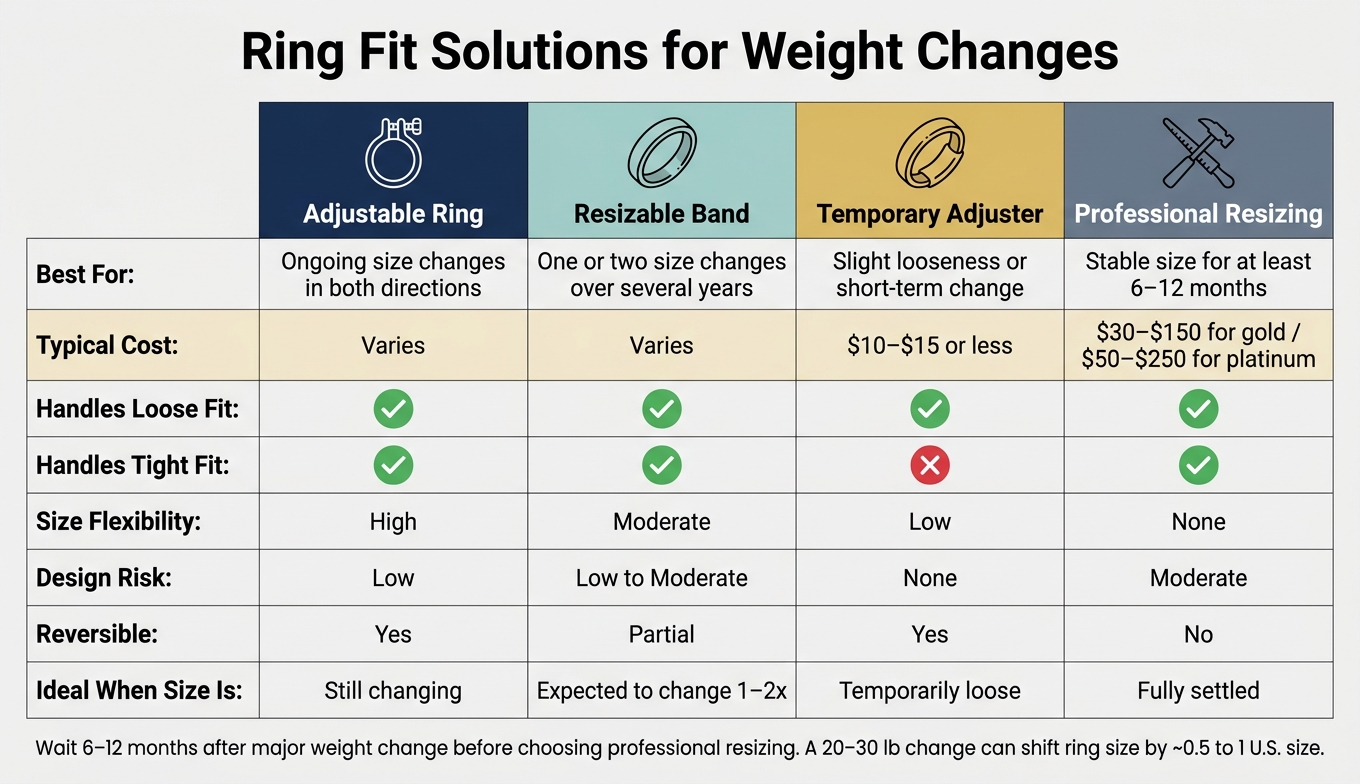
Ring Fit Solutions for Weight Changes: Side-by-Side Comparison
If your ring size may go up or down, the right pick depends on how much change you expect and whether that change seems temporary or settled.
Adjustable Rings for Ongoing Size Changes
An adjustable ring is often the most practical pick when your finger size shifts over time. You can tighten or loosen the fit at home, which helps when your size moves in either direction. So if weight loss makes a ring loose and weight regain makes it tight, you can deal with both without a trip to the jeweler. They’re also useful during pregnancy, with seasonal swelling, or anytime your size tends to fluctuate.
For daily wear, an adjustable engagement ring or wedding band can save you from making a permanent sizing choice too soon while your body is still changing. Adjustable stacking rings work the same way. The sizing mechanism stays hidden inside the band, so the ring keeps its original look, and the design doesn’t require cutting or soldering.
Resizable Bands, Temporary Adjusters, and Professional Resizing
Some rings come with resizable bands or built-in adjustability. These can allow a partial size change while still keeping a clean fit. If the change is small or your size hasn’t settled yet, a temporary ring adjuster is usually the best short-term fix. These small inserts - like silicone spirals, plastic guards, or metal snuggies - take up extra space and make the ring fit more snugly.
They’re reversible and low-cost, often under $10 to $15, which makes them easy to try. The trade-off is comfort: you may feel them on your finger, so they tend to work best as a stopgap, not a long-term answer.
Professional resizing makes more sense when your size change looks stable, the ring’s metal and design can handle the work, and you want a cleaner fit than inserts can give. In that case, a jeweler cuts the band and adds or removes metal to reach the new size. In the U.S., simple gold resizing often costs about $30 to $150. Platinum usually runs higher, around $50 to $250.
Here’s the quick breakdown:
| Option | Best For | Cost | Design Risk |
|---|---|---|---|
| Adjustable ring | Ongoing fluctuations in both directions | Varies | Low - no cutting or soldering |
| Resizable band / built-in adjustability | A partial size adjustment without a full resize | Varies | Low to moderate - depends on the mechanism |
| Temporary adjuster | Slight looseness or a change that may be temporary | Low | None - fully reversible |
| Professional resizing | Stable, long-term size change | Higher and depends on metal/design | Moderate - depends on the ring |
One caveat matters here: pavé, channel-set, and full eternity bands are often risky - or simply not possible - to resize the usual way. If your ring falls into one of those groups, ask a jeweler about other options, such as sizing beads, spring inserts, adjustable shanks, or remaking the ring.
If your size is still changing, don’t lock in a permanent resize too early. It’s usually smarter to wait several months after a major weight change before choosing a permanent resize.
Compare Your Options Before You Buy or Resize
Use this comparison to match the ring to the way your size shifts - up, down, or both.
Side-by-Side Comparison: Adjustability, Comfort, Security, and Durability
Focus on the tradeoffs that matter most: fit, comfort, security, and how the ring holds up over time.
| Adjustable Ring | Resizable Band | Temporary Adjuster | Professional Resizing | |
|---|---|---|---|---|
| Size flexibility | High - fits a range of sizes in both directions | Moderate - made to allow future resizing | Low - mostly helps with looseness, not tightness | None - sets the ring to one size |
| Comfort for daily wear | High when well-made; lower-cost versions may have exposed gaps or hardware that can bother skin | High - feels like a normal solid ring once resized | Varies - silicone and plastic can feel bulky; sizing beads may take a short adjustment period | High - custom fit with no added hardware |
| Security against slipping | High when worn within its adjustment range; less steady at the far ends | High after resizing | Moderate - helps cut slipping, but very loose rings can still come off | High - permanent fit |
| Long-term durability | Good for daily wear; moving parts may wear out sooner | Good; made with future resizing in mind | Insert wears out; beads are low-risk if installed well | Best when limited to a small number of changes |
| Ideal use case | Weight changes that continue over time, or anyone who wants at-home flexibility | Buyers who expect one or two size changes over several years but still want the feel of a normal ring | Seasonal looseness, short-term weight loss, or a ring that's slightly loose while waiting for size to settle | Stable size for at least 6–12 months after a major weight change |
| When to avoid | Heavy stone settings or heirloom rings that need a solid shank | If your size is likely to keep shifting often | If the ring is very loose, expensive, or worn during active tasks | During active weight change or on eternity, tension, or detailed designs |
Use those tradeoffs to pick the simplest option that fits your likely size range.
Which Option Works Best for Your Situation
If your weight is still moving - looser after weight loss, tighter after weight regain - an adjustable ring is usually the most practical pick for daily wear. It makes the most sense when your size can change in either direction.
If the size shift is small or may not last, a temporary adjuster is the short-term fix. It costs less, doesn't alter the ring, and gives you time before making a permanent call.
If you're buying a new ring and expect size changes later, look for a resizable band with a plain inner shank. That gives a jeweler space to work safely if you need a resize down the road. For engagement rings and wedding bands you plan to wear for decades, that detail matters more than most people think.
If your size has stayed steady for at least 6–12 months after a major change, professional resizing gives you the cleanest permanent result. It costs more, but it's the right move once your size has settled.
Choose the ring style that fits how often your size changes, not just how it looks in the display case.
Conclusion: Keep Your Ring Comfortable and Secure Over Time
Ring fit changes over time. Weight loss can make a ring feel loose. Weight gain can make it feel tight. So it helps to plan for a size range, not just one exact measurement.
After looking at the main options, the simplest rule is this: match the fix to how long the size change is likely to last. A short-term fix makes sense for temporary swelling. An adjustable ring works better when your size shifts on and off. And professional resizing is the better choice when your new size has stayed steady.
Do two things: check your fit after major body changes, and stop wearing a ring that no longer slides on, sits right, or comes off the way it should.
A Simple Rule for Buying a Ring When Your Size May Change
If your size may change, choose flexibility first. Go with permanent resizing only after your size settles. The goal is simple: a ring that feels secure enough not to slip off, but comfortable enough to wear every day. That way, you can wear it now without boxing yourself in later.
FAQs
How do I know if my ring size is still changing?
Pay attention to how your ring fits over a few weeks, especially if your routine or health has changed. Small shifts are common. Heat, exercise, salty food, and hydration can all make a ring feel a bit tighter or looser from day to day.
If your ring keeps feeling tight or loose even when things seem stable, that change may be more lasting. Common causes include weight changes, pregnancy, and aging. If you notice ongoing pain, swelling, or signs that circulation is being affected, talk to a medical professional.
Can a ring be resized more than once?
Yes, but it depends on the ring’s design.
With a standard ring, resizing usually means cutting the metal and soldering it back together. Do that too many times, and the band can get weaker over time. It’s a bit like bending a paper clip again and again - it may hold for a while, but repeated changes can take a toll.
Rings with built-in hidden adjustment mechanisms are different. They’re made for repeated at-home size changes without giving up durability.
Either way, it’s smart to check with a professional before making more adjustments.
What should I do if my ring gets stuck?
If your ring is stuck, stay calm and first see if you need medical help. If you have sharp pain, numbness, tingling, or skin discoloration, get medical care right away.
If it’s not an emergency, don’t force the ring off. That can make things worse fast. If heat, salt, or physical activity may have caused swelling, give your hands time to return to normal before you try again. If the discomfort keeps going, talk to a jeweler or a healthcare professional.


