

Engagement Ring Insurance: What Resizing Does to Your Coverage
A ring resize usually does not cancel your insurance. The main risk is simpler: your policy may list a ring that no longer matches the one you now own.
Here’s the short answer:
- If the resize is minor, coverage often stays the same
- If metal is added, prongs are changed, or the shank is replaced, your insurer may want new records
- If your ring’s replacement cost goes up and your policy limit does not, you could be underinsured
- Damage tied to bad jeweler work may be denied under many home or renters policies
- Your safest move is to keep photos, invoices, and an updated appraisal when the change is more than small sizing work
In plain terms: insurance pays based on the ring description and value in your file. If that file still shows the pre-resize version, a later claim can slow down or get disputed.
A few policy points matter most:
- scheduled item description
- repair or alteration rules
- workmanship exclusions
- valuation method, such as replacement cost or stated value
- whether the ring is covered while the jeweler has it
Before resizing, I’d check the policy and email the insurer. After resizing, I’d save the jeweler’s receipt, take new photos, and send updated paperwork if the work changed the ring’s build or cost.
| Situation | What it can mean for coverage |
|---|---|
| Small size change | Often no policy change needed, but keep the receipt |
| Large size change | Insurer may want new records |
| Added metal or new shank | Value may change, so the old appraisal may be off |
| Prong or setting work | Future stone-loss claims may get more review |
| No paperwork from jeweler | Claim support gets harder |
That’s the core issue: keep the policy matched to the finished ring, not the old version.
How to Insure Your Engagement Ring: Complete Guide
sbb-itb-9da40c1
When Resizing Affects Coverage and When It Does Not
A resize only affects coverage when the work changes the ring enough that your policy description, stated value, or loss history no longer lines up with the finished piece. In plain English: if the ring you wear no longer matches the ring listed in your policy, that can create trouble during a claim. Coverage questions are more common when the finished ring no longer fits the policy description or the appraisal on file. That mismatch is usually the first thing an insurer checks.
The main issue is description accuracy. Most U.S. jewelry policies insure a specific item based on the description and appraised value already on file. If the ring on your finger no longer matches what appears in your policy documents, the insurer may want updated records before it pays a claim.
How Insurers Classify Resizing
U.S. insurers usually separate resizing into routine maintenance, repair, or structural change. Which bucket applies depends on what the jeweler actually does, not just the word “resize.”
A small size adjustment often stays in the maintenance bucket. Bigger size changes, added metal, or changes to the setting tend to move things into a category where updated records are needed. And there’s another catch: damage caused by poor workmanship during resizing may be excluded unless the jeweler has separate coverage.
Situations That Can Trigger Coverage Problems
Some resizing jobs deserve a closer look because they can change the ring enough that the original policy description is no longer accurate.
| Resizing Scenario | Why It Raises a Coverage Flag |
|---|---|
| Two-size-or-more change | Requires cutting, reshaping, and re-soldering the band; can affect metal weight, strength, and replacement value |
| Added metal or reinforcement | Can increase replacement value and make an existing appraisal less accurate |
| Setting or prong changes | May affect stone security; if a stone is later lost, the insurer will review whether the cause was accidental or workmanship-related |
| Resize without a written jeweler record | Leaves no documentation of the ring's condition after the work, which can complicate claim review |
If the resize changes the ring’s structure or value, the next step is to check the policy terms that deal with repairs, alterations, and workmanship. Before resizing, review the policy language that defines repair, alteration, and any required notice.
What to Check in Your Policy Before You Resize
Read the policy before the jeweler starts the work. The goal is simple: match the policy language to the exact job the jeweler plans to do.
Policy Terms That Matter Most
Start with the scheduled personal property section of your personal articles floater. That’s where the ring should appear as its own item, with a detailed description of things like:
- metal type
- carat weight
- stone shape
- designer or brand
- serial or certification numbers
- stated value
That description needs to match the ring after the resize, not just before it.
Next, check the repairs, alterations, or modifications clause. This section tells you if coverage stays in place during the resize and when you need to give notice. If the work is more than minor, like resizing by more than a half-size or replacing the shank, the insurer may treat it as a material change that must be reported within a set time frame.
You should also read the maintenance and condition terms. Some policies expect prongs, settings, and sizing to stay in good condition. If they don’t, neglect can become an issue later if you file a claim.
Two other parts have a direct effect on claim approval, replacement value, and premium terms.
First, look for faulty-workmanship exclusions. Many standard homeowners and renters policies do not cover damage caused by poor jeweler work. So if the resize itself damages the ring, the insurer may deny that part of the loss.
Second, check the valuation method. See whether the policy uses agreed value, stated value, or replacement cost. Also note whether any actual cash value terms apply.
If the resize increases replacement value but the scheduled limit stays the same, the ring could end up underinsured if it’s lost or destroyed.
After you understand the policy terms, check the insurer’s rules before any work begins.
What to Confirm With Your Insurer Before the Work Begins
Contact your agent before the resize and treat it as a pre-resize verification step. Confirm these points:
- whether the resized ring still counts as the same scheduled item or needs a new description
- whether notice is needed before the work starts or after it ends, and the exact deadline
- whether a new appraisal is required and what qualifications the appraiser must have
- whether the ring is covered while it’s with the jeweler and whether the jeweler must carry insurance
- whether the alteration changes your premium, coverage limit, or deductible
Get that confirmation in writing by email. If a claim comes up after the resize, that paper trail helps show that you followed the insurer’s instructions. That can matter a lot when notice rules or exclusions are disputed.
Once the policy is clear, keep records that show exactly what changed. Then hold on to the receipt, updated appraisal, and jeweler report in case you need them for a future claim.
Documents That Support a Future Claim
Once your insurer’s rules are clear, document the ring before the jeweler starts. If something goes wrong after a resize, paperwork can make all the difference. You want records that show you own the ring, what it looked like before the work, and what it would cost to replace now.
Records to Keep Before and After Resizing
Before the resize, pull together your original sales receipt, current appraisal, any stone grading reports such as a GIA report, your policy declarations page, and clear photos of the ring from the top, side, and inside of the band. Those photos help show the ring’s condition before any work is done.
After the resize, ask for a jeweler invoice that lists the date, business name, contact details, and the exact work performed. For example, "sized down one-half size, re-tipped two prongs." Keep any repair or alteration report too. Then take a new set of photos from the same angles. If the resize changed the shank or setting, get an updated appraisal and send it to your insurer. Keep written proof of any policy update with the rest of your file.
If you ever need to file a claim, these records are often what the insurer will look at first.
Use this checklist to see which document supports which part of a claim.
| Document | Ownership | Identity | Condition | Value | When to Gather |
|---|---|---|---|---|---|
| Original sales receipt | ✓ | Pre-resize | |||
| Policy declarations page | ✓ | Pre-resize | |||
| Pre-resize photos | ✓ | ✓ | Pre-resize | ||
| Current appraisal | ✓ | ✓ | ✓ | Pre-resize | |
| Stone grading report (e.g., GIA) | ✓ | ✓ | Pre- or post-resize | ||
| Jeweler invoice / work order | ✓ | ✓ | Post-resize | ||
| Post-resize photos | ✓ | ✓ | Post-resize | ||
| Updated appraisal | ✓ | ✓ | ✓ | Post-resize, if needed |
How Good Records Help With Claim Approval
Lack of documentation is one of the most commonly cited reasons jewelry insurance claims are denied. That means if a ring is lost or damaged after a resize, solid records can save you from a long, frustrating back-and-forth.
Here’s what that looks like in practice: pre- and post-resize photos, paired with the jeweler’s invoice, help show the insurer the exact ring that needs to be replaced. They also show that the work was limited to sizing, not a full redesign. And a stone grading report can independently confirm the center stone’s cut, color, clarity, and carat weight. If there’s ever a dispute about the stone after the setting was adjusted, those details matter.
Store everything in one digital folder and one paper file. Keep copies in at least two places, such as encrypted cloud storage and a home safe, so the records are ready if you need to file a claim.
How to Keep Your Coverage Intact Before and After a Resize
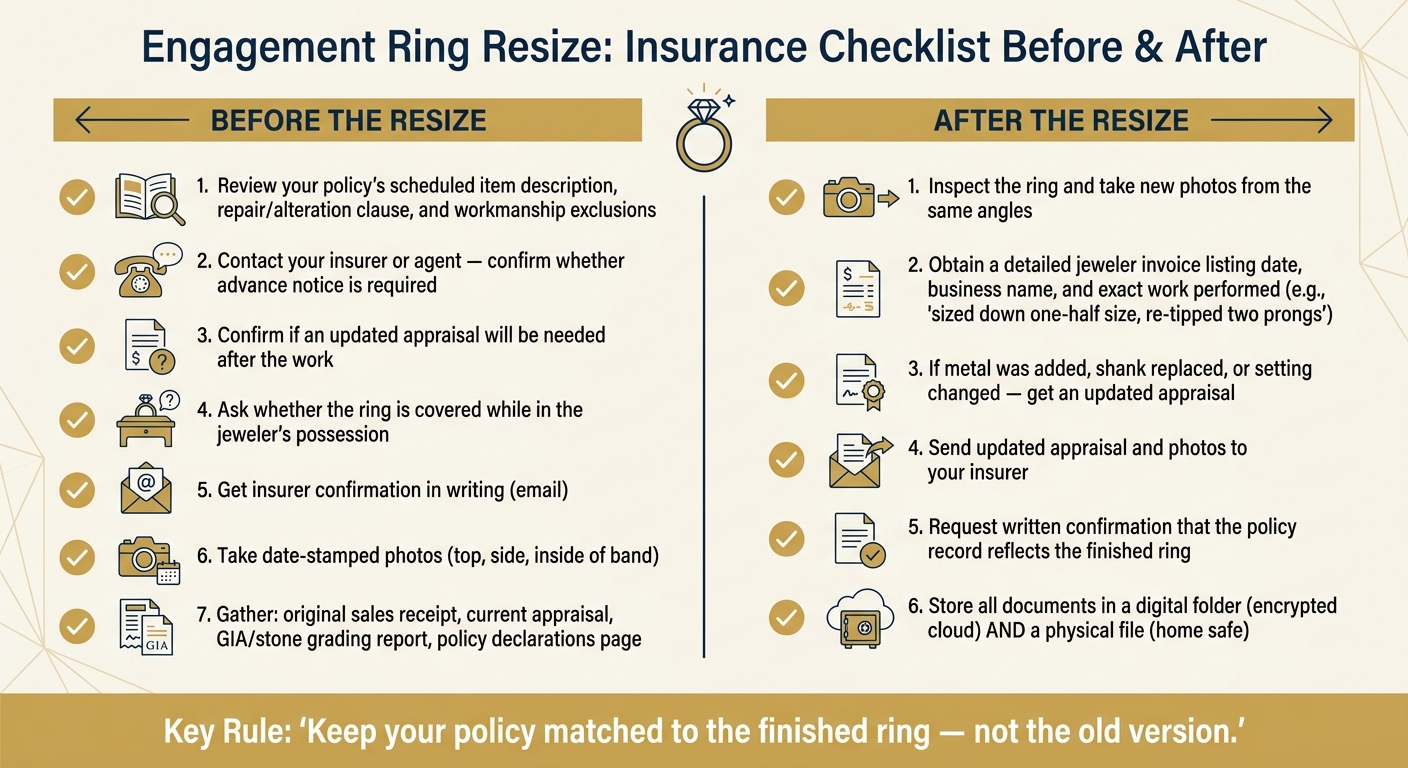
Engagement Ring Resize: Insurance Checklist Before & After
Resizing usually doesn't end coverage. The trouble starts when the policy record no longer matches the ring after the work is done.
A Pre-Resize and Post-Resize Checklist
Once you know what your policy says, the next step is simple: keep the insurer's file in sync with the finished ring.
Before you send the ring to the jeweler, review your policy and ask your insurer two direct questions:
- Does resizing require notice in advance?
- Do you need an updated appraisal after the work?
It's also smart to use a qualified jeweler who gives you a written service record that explains what was done.
Before the work starts, save date-stamped photos, your appraisal, receipt, and grading reports. After the jeweler finishes the resize, update your records right away. Inspect the ring, take new photos, and keep the jeweler's invoice and service report.
If the resize goes beyond a minor size change - for example, if metal was added, the shank was changed, or stones were reset - ask for an updated appraisal and send it to your insurer. That way, the item description and coverage limit can match the ring as it now exists. Then get written confirmation from the insurer.
If the resize changes the ring in any material way, update the appraisal and the insurer's record right away.
Conclusion: Keep Your Policy Matched to Your Ring
Resizing rarely ends coverage. The main risk is a gap in the records. Keep the policy matched to the finished ring, save every receipt and photo, and update the appraisal after any material change.
FAQs
Will my insurer cover the ring while the jeweler has it?
Coverage depends on your policy terms. Before you drop off the ring, contact your insurer and confirm whether the work is covered during resizing or repair.
Some policies include in-custody coverage. Others may ask you to make sure the jeweler has their own liability or bailee insurance while the ring is being serviced.
How much resizing is a material change?
A professional resize of one to two sizes is usually the safe range a jeweler can handle without hurting the ring’s structure.
Go past that range, or resize the ring too often, and the job gets riskier. The metal can weaken, the band can lose its shape, and delicate settings may get damaged. Since resizing permanently adds or removes metal, insurers often see it as a material change.
Do I need a new appraisal after a resize?
It depends on your insurance policy. Since resizing can affect a ring’s structure or replacement value, it’s smart to check with your insurer before the resize or soon after.
An updated appraisal can help make sure your coverage still matches the ring’s current condition. Keep all paperwork, including jeweler reports and receipts, in case you ever need to file a claim.


