

Ring Avulsion: The Injury Every Man Wearing a Band Should Know About
A wedding band can injure your finger in seconds if it snags and your body keeps moving. I’d boil the whole topic down to this: take your ring off for lifting, ladders, tools, truck beds, and machine work; wear silicone for higher-risk activity; and go to the ER at once if your finger turns blue, white, numb, cold, or keeps swelling.
Here’s the short version:
- What it is: a ring gets caught, and the force tears skin, blood vessels, nerves, or bone
- Where it happens: pull-up bars, weights, ladders, rails, hooks, tools, and machinery
- What makes it worse: a loose ring that spins, or a ring with raised edges
- What to do first: try only gentle removal with soap, oil, or conditioner; keep the hand above heart level; use cold water or ice around the ring
- When to stop and get help: if the ring won’t come off, or if the finger looks pale, blue, purple, numb, cold, or more swollen by the minute
- How to cut risk: match the ring to the task - metal for normal daily wear, silicone or no ring for risky work
A few points stand out to me. First, the ring does not need to be loose to cause harm - but a loose ring is more likely to spin and snag. Second, this is not just a jobsite issue. It can happen during a workout, a home project, or a missed grab on a ladder. Third, blood flow is the big danger. If circulation drops, the finger can get worse fast.
If part of the finger is detached, I’d wrap it in clean, slightly damp material, place it in a sealed plastic bag, and keep that bag near ice, not on ice, while heading to the ER.
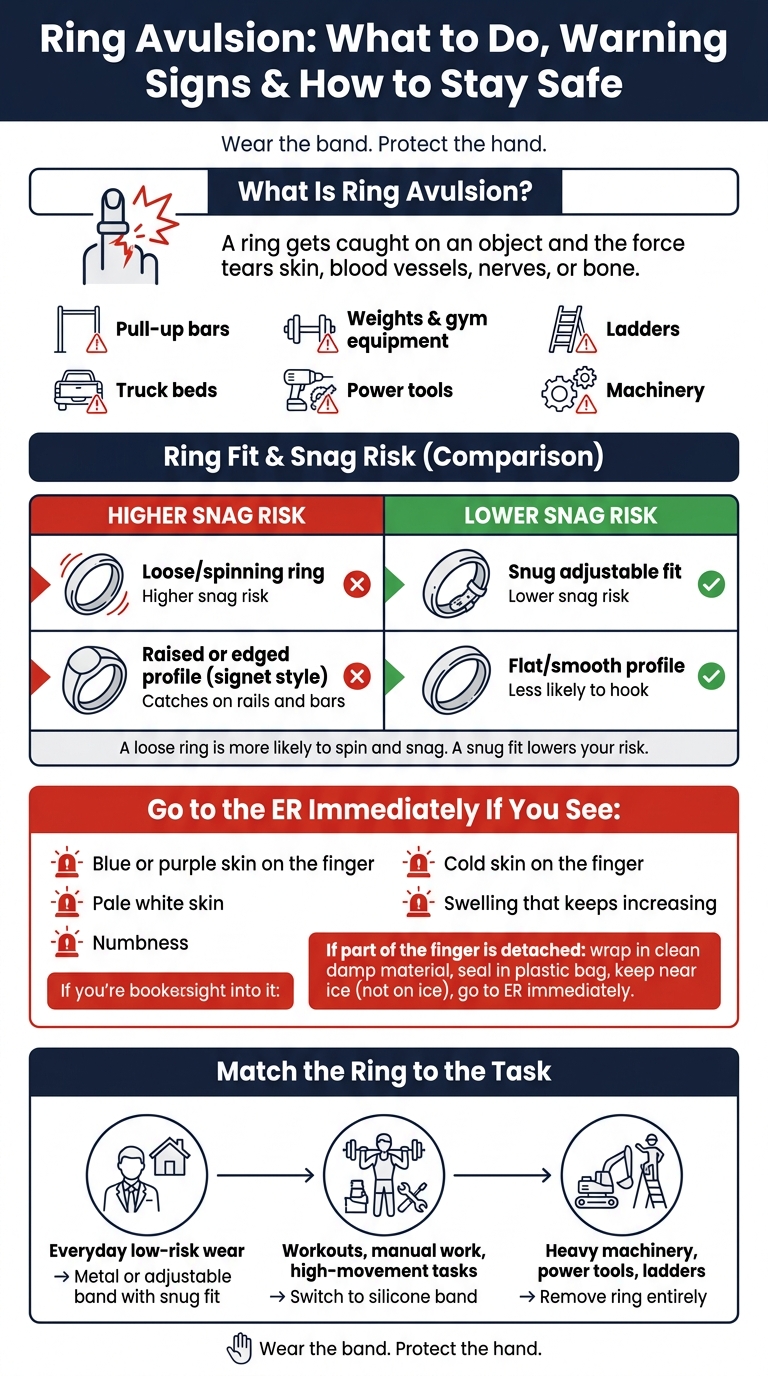
Ring Avulsion: What to Do, Warning Signs & How to Stay Safe
The hidden danger of wearingf rings during sports and work
Quick overview
| Topic | Main point |
|---|---|
| Injury | A caught ring can tear tissue or amputate a finger |
| Common causes | Pull-up bars, weights, ladders, truck beds, tools, machines |
| Higher snag risk | Loose fit, spinning ring, bulky or edged design |
| ER warning signs | Blue/purple skin, white skin, numbness, cold finger, rising swelling |
| Safer habit | Remove metal rings before risky activity |
| Lower-risk option | Silicone band for workouts or manual tasks |
My takeaway: wear the band when it makes sense, but don’t wear metal when your hand can snag. That one habit can spare you a trip to the ER - and maybe spare your finger too.
Where Ring Avulsion Happens Most Often
Some places and activities make snagging much more likely.
Gym equipment, weights, and pull-up bars
Pull-up bars are one of the biggest trouble spots. If your grip slips or you lose your hold, a ring can catch on the bar and turn into a fixed point while your body drops away. That split second is all it takes.
Weights and lifting equipment can cause the same kind of problem. If the ring shifts and catches during a rep or while reracking weight, your finger takes the force.
Ladders, truck beds, tools, and jobsite equipment
Ladders are another common danger zone. A missed step or quick grab for the rail can leave the ring hooked in an instant. The same goes for truck beds, power tools and machinery, and hand tools. They all have rails, edges, hooks, or gaps that can snag a ring at the worst possible time.
How ring fit and ring shape affect snag risk
Fit matters more than most people realize. A loose ring is more likely to spin and catch. This comes up a lot for men with larger knuckles. A fixed ring has to be large enough to get over the knuckle, which can leave it loose and spinning at the base of the finger.
A steady fit helps keep the ring from sliding or turning.
Shape matters too. Bulky rings or rings with edges, like signet-style designs or raised details, are more likely to hook onto rails, bars, and equipment edges.
| Fit Issue | Risk It Creates |
|---|---|
| Too loose (ring spin) | More likely to snag on edges, bars, or hooks |
| Raised or edged profile | More likely to catch on equipment or rails |
When a ring catches, things can get bad fast.
sbb-itb-9da40c1
How Serious Ring Avulsion Can Be and When to Go to the ER
From skin injury to loss of circulation to amputation
Ring avulsion can begin with what looks like a simple skin tear. But in bad cases, it can cut off blood flow, strip the skin from the finger, or even lead to amputation.
Once a ring gets caught, the big issue is blood flow. If circulation is blocked, the injury can get worse fast.
Warning signs to watch for after a ring-related hand injury
After any ring-related hand injury, watch the finger closely in the next few minutes. Look at the color. Notice the temperature. Pay attention to whether feeling is changing.
If the skin turns blue or purple, pale white, numb, cold, or the swelling keeps getting worse, go to the ER right away.
| Warning Sign | Action Needed |
|---|---|
| Blue or purple skin | Immediate ER visit |
| Pale white skin | Immediate ER visit |
| Numbness | Immediate ER visit |
| Cold skin on the finger | Immediate ER visit |
| Swelling that keeps increasing | Seek professional help now |
What to do right away before you reach the ER
On the way to the ER, stick to gentle steps only. You can apply soap, oil, or hair conditioner to the finger and ring, then try a gentle twist. Keep your hand above heart level to help with swelling. You can also put ice around the ring or place the finger in cold water. If the ring still won’t budge, stop trying and get it removed by a medical professional using specialized ring cutters.
If part of the finger has been detached, wrap it in clean, slightly moist material. Put it in a sealed plastic bag, then keep the bag near ice, not directly on ice.
Then go to the ER immediately.
How to Lower Ring Avulsion Risk Without Stopping Ring Wear
Once you see how fast ring avulsion can happen, the next move is pretty clear: cut the risk before the activity starts.
When to take your ring off before an activity
Take your ring off before any activity where your hand could snag and your body could keep moving. That’s the core idea. If your ring catches on something while the rest of you keeps going, things can go bad in a split second.
Silicone bands for high-movement or higher-risk situations
If you still want something on your finger, silicone is the safer pick for high-risk activity. For workouts and other higher-risk tasks, silicone bands are a practical swap. You still wear a ring, but you avoid metal in situations where snagging is more likely.
Adjustable bands for a better fit and easier daily safety
For daily wear, a snug adjustable band can help reduce spin without making you stop wearing a ring. A loose ring has a higher chance of snagging. Adjustable bands open over the knuckle and close to a snug fit at the base, which helps reduce spin and lowers snag risk.
Satinski's adjustable rings use a hidden adjustable band that fits U.S. sizes 5 to 9.
Conclusion: Keep Your Hands Safe and Keep Wearing Your Band
The fix is simple: match the ring to the task.
Ring avulsion can happen during normal, everyday snag moments. That means the main risk often comes down to when you wear your ring and how well it fits. A loose ring is more likely to catch. A snug adjustable band lowers that risk.
For high-risk activity, switch to silicone. Wear silicone during workouts and manual work.
For day-to-day wear, a snug adjustable band makes sense. For high-risk activity, use silicone or take the ring off entirely. And if you notice signs of injury, go to the ER.
Wear the band. Protect the hand.
FAQs
How common is ring avulsion?
The search results reviewed do not provide data or statistics on how often ring avulsion happens.
Put simply, the sources checked do not state its frequency or prevalence.
Can a tight ring still cause ring avulsion?
Yes. Ring avulsion usually happens when a ring catches on something. But a tight ring can add to the risk because it’s harder to remove fast if the finger swells or gets stuck.
A rigid, tight-fitting band can make an emergency tougher to handle. A ring that allows some adjustment, or has a fit that can handle normal finger-size changes, may be a safer and more comfortable pick for higher-risk daily activities.
Should I wear a silicone band instead?
Silicone bands are a go-to pick for active people because they’re flexible, comfortable, and affordable, usually $10 to $30. They work well for workouts, outdoor activities, and those times when your fingers swell and a metal ring starts to feel tight.
They’re practical and safer for an active lifestyle, even if they don’t have the classic look of a metal ring. If you want a more classic style without giving up comfort, an adjustable metal band can be a durable long-term choice.


