

Ring Stuck on a Swollen Finger? Safe Removal, Then Prevention
If a ring is stuck, I treat the finger first and the ring second. The safest order is simple: bring swelling down, use lubricant, try floss only if the finger stays pink and warm, then stop and get help if warning signs show up.
Here’s the short version:
-
First, lower swelling
- Keep the hand above heart level for 10–15 minutes
- Cool the finger for 5–10 minutes
- Wait about 10 minutes before trying again
-
Next, try slow removal
- Use soap, lotion, oil, or petroleum jelly
- Rock the ring off in small moves
- Do not yank or keep twisting
-
If needed, use floss
- Wrap the finger snugly
- Unwind from the ring side
- Stop at once if the finger turns blue, gray, white, or very pale, or if there’s numbness, tingling, or sharp pain
-
Get help fast if blood flow may be cut off
- A finger that is cold, numb, or discolored needs urgent care
- If the finger looks fine but the ring still will not come off, a jeweler may be able to cut it
-
To stop this from happening again
- Take rings off before workouts, hot weather, sleep, gardening, travel, or after a hand injury
- Recheck fit every 1–2 years
- Finger size can shift during pregnancy, heat, salt intake, exercise, and with joint changes
A few facts stand out. Capillary refill should return in about 2 seconds. Pregnancy can increase blood volume by about 50%, and ring size may shift by 0.5 to 2 sizes. That helps explain why a ring that fit fine last month can suddenly get stuck today.
| Step | What I do | When I stop |
|---|---|---|
| 1 | Hand up for 10–15 min | If swelling keeps getting worse |
| 2 | Cool for 5–10 min | If skin color looks off |
| 3 | Add lubricant and rock slowly | If pain builds |
| 4 | Try floss only if finger is pink and warm | If numbness, tingling, or color change starts |
| 5 | Go to urgent care or a jeweler | If the ring still will not move |
The main point: I don’t force a stuck ring off. I lower swelling, try the safest steps in order, and get help early if the finger shows any sign of poor circulation.
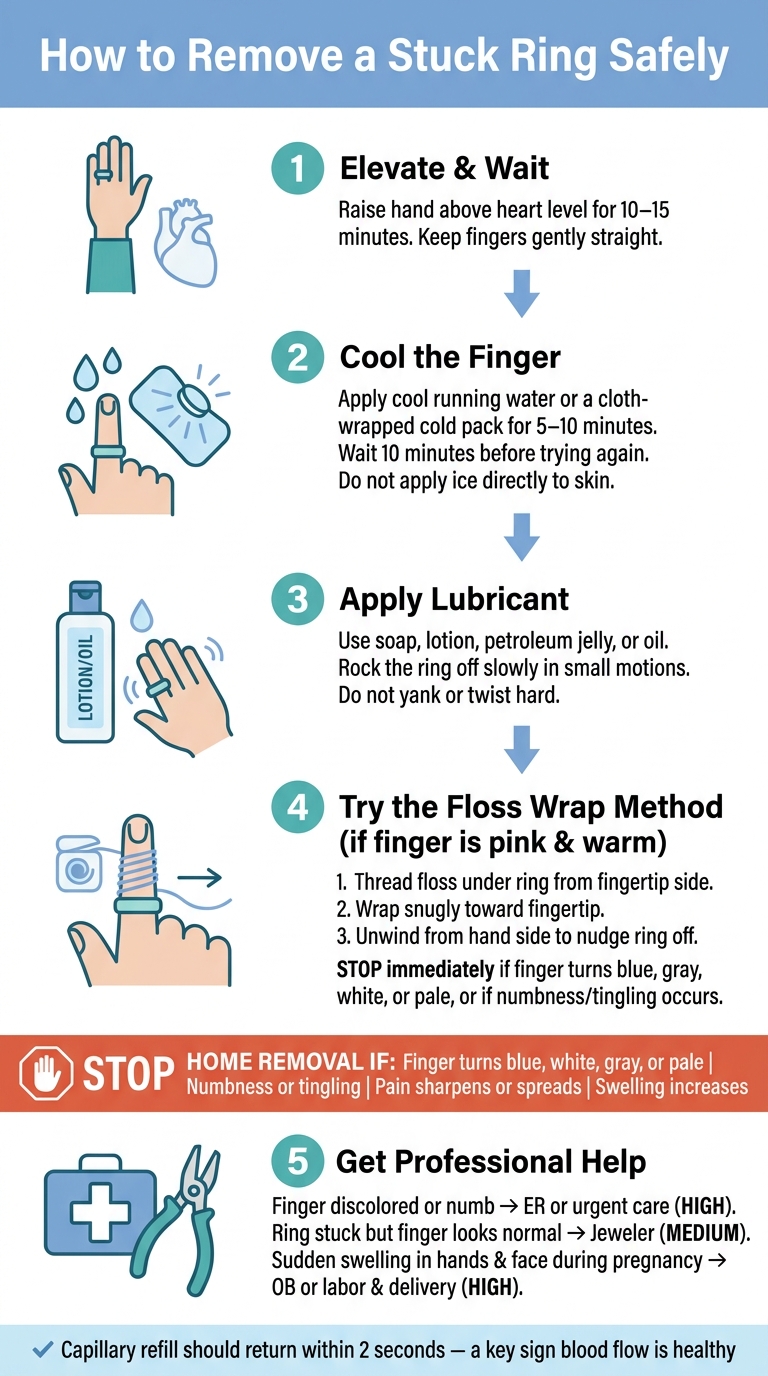
How to Remove a Stuck Ring Safely: Step-by-Step Guide
Removing a stuck ring with dental floss - NO CUTTING!
sbb-itb-9da40c1
How to Remove a Stuck Ring at Home, Step by Step
Go in order. Start with the easiest move, then only step up if the ring still won’t come off.
Reduce Swelling First with Elevation and Cold
Lift your hand above heart level for 10–15 minutes. That helps fluid drain away from the finger and may give you just enough space to get the ring moving. Keep your fingers gently straight, not clenched.
Then cool the finger with running water or a cloth-wrapped cold pack for 5–10 minutes. After that, wait 10 minutes before you try again. Don’t put ice straight on the skin. It can irritate the area or cause cold injury. If you have diabetes, Raynaud's disease, or another condition that affects circulation, keep cold sessions short and lean more on elevation. Check capillary refill too: the color should come back within 2 seconds.
If the ring still won’t move after the swelling goes down, try lubricant next.
Apply Lubricant and Ease the Ring Off Slowly
Once the swelling has eased a bit, gently dry the finger and add a generous amount of lubricant around the ring. Soap, lotion, petroleum jelly, or oil can all work. Spread it around the whole band and massage it into the spot where the ring presses against the skin, especially underneath.
Then start working the ring off in small, slow motions. Rock it forward a little at a time instead of pulling hard. It also helps to have someone hold the skin on the hand side of the ring so it doesn’t bunch up around the knuckle. If the lubricant starts to wear off, add more before you keep going.
If it still won’t move and the finger stays warm and pink, go to the floss method.
How to Use the String or Dental Floss Wrap Method
If lubricant doesn’t do the trick and the finger is still warm, pink, and responsive, the string or dental floss wrap method is a good next move. Use plain dental floss or thin nylon string. Skip thick yarn or rough twine, since they can press unevenly on the finger.
Here’s how to do it:
- Thread one end under the ring from the fingertip side toward the hand. Leave about 1–2 inches on the hand side, with the longer end pointing toward the fingertip. If it’s hard to feed under the ring, a rounded tape-covered paperclip can help guide the floss through.
- Wrap the finger snugly with the long end, starting right at the ring and moving toward the fingertip. Keep the loops tight and even, with each wrap touching the one before it. This presses down the swollen tissue for a moment so the finger gets a bit narrower. Firm is fine. Painful is not. The skin should stay pink.
- Unwind from the ring side by pulling the short end on the hand side. As the wrap comes off, it nudges the ring forward over the compressed tissue and toward the fingertip.
Watch the fingertip closely while you do this. Stop right away if you notice numbness, tingling, sharp pain, or any blue, gray, or very pale color. If that happens, unwrap the floss at once.
When to Stop and Get Professional Help
If the ring still won’t move after cooling, lubrication, and floss, stop before things get worse. Pushing past that point can make swelling worse and make the ring even harder to remove.
If the ring is cutting off circulation or the finger keeps getting more swollen, don’t keep trying at home. Get help right away.
Warning Signs That Mean Stop Trying at Home
Stop immediately if you notice any of these:
- Blue, white, pale, or gray finger
- Numbness or tingling
- Pain that gets sharper or spreads
- Swelling that increases
During pregnancy, sudden swelling in both hands and the face needs urgent medical care.
Where to Go for Ring Cutting or Urgent Care
Use the guide below to match the level of urgency.
| Situation | Where to Go | Action |
|---|---|---|
| Finger is blue, white, pale, or numb | ER or urgent care | High |
| Ring is stuck, but the finger looks normal | Jeweler | Medium |
| Sudden swelling in hands and face during pregnancy | OB, midwife, or labor and delivery | High |
Medical staff can cut the ring fast with special tools. If the finger still looks healthy but the ring won’t budge, a jeweler is often the better choice. They can cut the band cleanly, and the ring may be repairable.
Once the ring is off, focus on what caused the swelling so it doesn’t happen again.
How to Stop a Ring From Getting Stuck Again
Once the ring is off and your finger feels normal, the next step is simple: stop the same thing from happening again. That starts with knowing why your fingers swell in the first place.
Know What Causes Finger Swelling
Heat and exercise can make fingers swell because they increase blood flow and fluid buildup. A salty meal can also lead your body to hold onto extra water, and that can show up as puffy fingers later that day or the next morning. Long flights, road trips, or even hours at a desk can slow circulation and let fluid collect in your hands.
Long-term body changes matter too. Pregnancy can increase blood volume by about 50%, and ring size may change by half a size to two full sizes, especially during the third trimester. Arthritis and other joint changes can slowly change the shape of the finger and knuckle over time. Even a hand injury can cause enough swelling in one spot to make a ring suddenly feel too tight.
A smart move is to track patterns for 1–2 weeks. If you notice swelling after workouts, hot weather, travel, or salty food, you can take your rings off before the problem starts.
Take Rings Off Before High-Risk Activities
Take rings off before workouts, gardening, lifting, hot days, sleep, and after any hand injury. If your fingers tend to swell overnight, add ring removal to your evening routine. That small habit can save you a lot of hassle the next morning.
Even if you're careful, hands don't stay the same forever. That's why fit checks matter.
Check Ring Fit Regularly as Your Hands Change
Ring size isn't permanent. Weight shifts, aging, pregnancy, and joint changes can all affect how a ring fits over time.
Check the fit every 1–2 years, or sooner if you notice deep marks, redness, or trouble getting the ring off. An easy at-home test is to slide the ring off in the morning, then try again in the evening, and once more after a workout or hot shower. If it keeps feeling hard to remove, that's a sign to have it checked.
Jewelers often suggest sizing appointments in the late afternoon, when finger size is closer to its average for the day instead of the smaller size many people have in the cool morning hours. If you're pregnant, check the fit every few weeks instead of waiting, since a ring that fits early may get too tight later. And if you have arthritis or you've had a major weight change, don't assume your old size still fits.
If your finger size tends to change a lot, a ring with a more flexible design may be a better long-term answer.
Ring Fit Options That Work Better Day to Day
Adjustable and Resizable Rings for Fingers That Change Size
If swelling keeps happening, the next move is simple: pick a ring that can move with your finger.
When your ring size shifts often, a fixed-size band can go from fine to too tight fast. Open, hinged, and adjustable bands give you more room to work with. They can widen to get over the knuckle, then sit more securely at the base of the finger.
What to Look for in a Ring That Fits Well Long-Term
Once you’ve picked an adjustable style, pay close attention to comfort and whether the ring can be resized later.
A comfort-fit interior has a slightly rounded inside instead of a flat one. That shape spreads pressure more evenly and helps the ring glide over the knuckle with less rubbing. That can make a big difference when your hands swell.
Band width matters more than many people think. Wider bands tend to fit more snugly. So if you’re choosing a ring that’s wider than the one you wear now, go up by half a size to a full size to leave space for normal swelling. Thinner bands, usually around 2–4 mm, are often easier to size with more precision and may feel less tight when fingers puff up.
It also helps to choose a metal that can be resized or cut off more easily if needed. Before you buy, test the fit in ways that match daily life:
- Make a fist
- Flex your fingers
- Mimic normal gripping motions
A ring that fits well should slide over the knuckle with slight resistance, sit snugly at the base without spinning freely, and avoid leaving deep marks after a few hours of wear. And yes, it’s worth asking one plain question before you pay: can this ring be resized later?
Conclusion: Remove Safely, Act Early, and Choose a Better Fit
If a ring gets stuck, start by cooling and elevating the hand. Then use lubricant and try the floss method. If pain gets worse, numbness starts, or the skin turns blue or pale, stop right away and get help from a medical professional.
After the ring is off, the best way to avoid the same problem is to watch for swelling triggers and choose a ring that can adjust as your finger changes.
FAQs
What if my knuckle is swollen?
If your knuckle is swollen, a ring can get stuck at the joint even when it fits fine at the base of your finger. In that case, start simple: cool your hand, keep it elevated, and then try soap, lotion, or oil to help the ring slide.
Another option is the string or dental floss wrap method, which can compress the finger and make removal easier.
If this keeps happening, adjustable rings may be a better fit.
Stop and seek urgent medical help if you have numbness, tingling, or your finger turns blue or white.
Can I use dental floss on any stuck ring?
Yes, the dental floss or string method is a standard way to remove a stuck ring.
Here’s the basic idea: carefully slide the floss under the ring, then wrap it snugly around the finger toward the knuckle. That wrapping helps compress swollen tissue, which can make it easier for the ring to move.
Next, gently unwind the floss from the bottom. As it unwraps, the ring may slowly slide over the compressed area.
If it doesn’t work, stop. The same goes if you feel pain, numbness, or notice skin discoloration. In those cases, seek medical help right away.
How do I know if my ring is too tight long-term?
A ring may be too tight for the long haul if changes in your finger size stick around instead of coming and going. Common warning signs include repeated discomfort, deep indentations, red marks, or swelling that doesn’t go away.
If you have persistent numbness, tingling, or skin discoloration, the ring is critically tight and needs immediate attention. See a medical professional if symptoms continue or your finger shape changes without a clear reason.


