

The Engagement Ring Arrived and It Doesn't Fit - Your Wedding Is in 3 Weeks
Yes - 3 weeks can still be enough. If your ring is a little loose, I’d use a same-day adjuster or a jeweler-added ring guard. If it’s tight, I’d call a jeweler today and ask for a rush resize. If the design can’t be resized safely, I’d stop pushing it and use a stand-in ring for the ceremony.
Here’s the short version:
- Loose ring: try a silicone or plastic adjuster first
- Very loose ring: ask a jeweler about sizing beads or a ring guard
- Tight ring: don’t force it on; ask about rush resizing right away
- Unsafe fit: take it off if you have pain, numbness, color change, or deep marks
- Hard-to-resize styles: eternity, tension, pavé, and channel-set rings often need a backup plan
- Time rule: if pickup isn’t guaranteed at least 3–4 days before the wedding, I’d use a stand-in
A few facts matter most here. Many resize jobs take 2–3 weeks, but simple work may be done in 1–7 business days. Temporary adjusters often cost about $5–$30, sizing beads or guards often run about $30–$100, and rush resizing may cost about $60–$200+ plus a rush fee.
| Problem | Best first move | Usual timing |
|---|---|---|
| Slightly loose | Silicone/plastic adjuster | Same day |
| More than slightly loose | Sizing beads or ring guard | 1–7 business days |
| Slightly tight | Jeweler fit check | As soon as possible |
| Too tight or painful | Remove it and ask about rush resize | 1–14 days, depending on design |
| Not safe to resize in time | Stand-in ring | Same day to a few days |
I’d treat this like a deadline problem, not a perfect-ring problem: get the ring to fit safely, look good in photos, and avoid damage before the wedding.
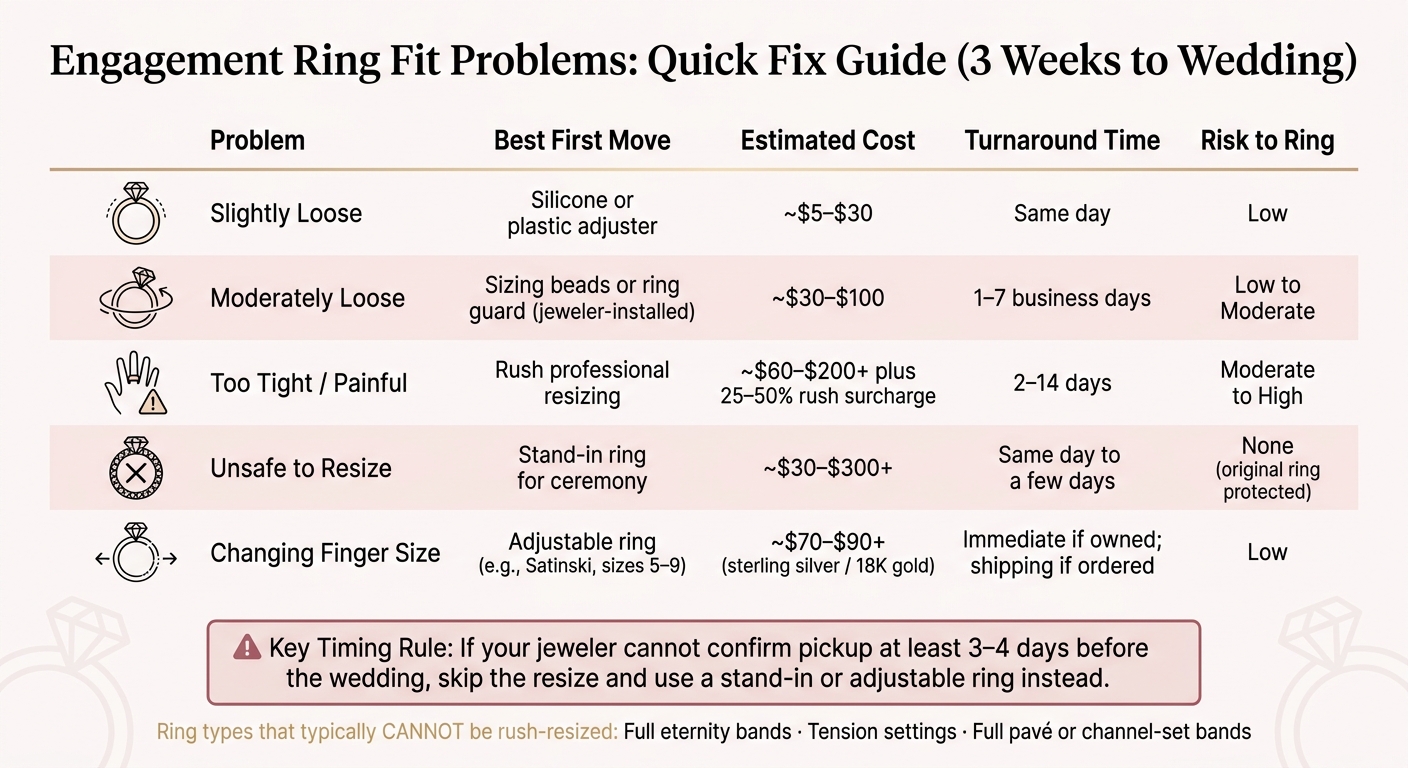
Engagement Ring Fit Problems: Quick Fix Guide (3 Weeks to Wedding)
3 WAYS TO SIZE DOWN a RING | WITHOUT CUTTING in HALF
sbb-itb-9da40c1
Ring Too Loose: The Fastest Safe Fixes Before the Wedding
If your ring is loose, start with the fastest reversible fix based on how much it moves and how many days you have left. These are short-term ceremony-week options, not permanent sizing changes. Begin with the least visible fix you can reverse, and if the ring still shifts, call a jeweler.
Silicone and Plastic Ring Adjusters: A Same-Day Fix
These inserts sit inside the band and make the inner circumference smaller without changing the ring itself. Spiral coils work for mild looseness, sleeves work for mild-to-moderate looseness, and clip-on adjusters work best when the ring feels much too loose. The tradeoff is simple: clip-on styles tend to show more, so they’re better for day-to-day security than close-up wedding photos.
Before you put one on, clean and dry the band so the adjuster doesn’t slide around. Start with the smallest size, then add thickness only if the ring still moves too much. Wear it for 10–15 minutes and pay attention to pinching or pressure spots. If your skin is sensitive, pick hypoallergenic silicone and stop right away if you see redness or irritation.
If the ring still spins after that, it’s time to move to a jeweler-made stabilizer.
Sizing Beads and Ring Guards: A Jeweler's Short-Term Fix
If the ring is more than a little loose, a jeweler can add sizing beads - small metal spheres soldered inside the band. They add friction at the base of your finger and help keep the ring from spinning or sliding, while still letting it pass over a larger knuckle. From the outside, they’re usually hard to notice and don’t change how the ring looks.
A metal ring guard is another choice when the ring is about a full size too big. It can give you more reduction and a steadier fit without doing a full resize. Both services usually take 3–7 business days, so call a local jeweler the same day you notice the problem and ask if rush service is available. Sizing beads on a gold or platinum ring usually cost $20–$60. A ring guard often costs $40–$100+, and rush fees may be added. These short-term fixes are useful if you think your finger size may change later.
Use the Wedding Band or a Stacking Ring to Hold the Fit
If your engagement ring is only a little loose, a snug wedding band worn next to it can help hold it in place and cut down on movement during the day. But only use this plan if the ring stays secure during normal wedding-day activity. If it can slip off with a light shake, or when your hand is relaxed and pointed downward, this alone isn’t safe enough.
Test it before the big day. Wear both rings together for a few hours while doing the kinds of things you’ll actually do - walking, gesturing, hugging, dancing. Check now and then to see whether the engagement ring shifts or spins more than you’re okay with. If it stays put through all of that, you’re probably fine. If it still moves too much, add a silicone adjuster or book a jeweler visit instead of crossing your fingers and hoping for the best.
If stacking by itself doesn’t keep the ring secure, use an adjuster or call a jeweler right away.
Ring Too Tight: What You Can Still Do in Time
Three weeks can be enough for a few fast fixes. But if a ring is too tight, this needs attention right away.
Do Not Force a Tight Ring onto Your Finger
A tight ring isn't just annoying. It can become a safety problem.
If the ring hurts or struggles to get over your knuckle even when your hands are cool and dry, stop there. Pushing it on can make things worse. The ring can get stuck, your finger can swell, and a snug fit can turn into a circulation issue caused by a tight ring.
Stop at once if you notice any of these signs:
- Sharp pain
- Tingling
- Numbness
- Color change
- The ring won't twist once it's on
The safest time to test fit is in the morning, when your hands are cooler and less swollen. Don't test it after exercise, a hot shower, or a salty meal. A small amount of soap, hand lotion, or petroleum jelly may help the ring slide on more easily. Do not use tools or string-wrapping tricks.
Request Rush Resizing as Soon as You Know There Is a Problem
With three weeks left, there may still be time. But you need to call a jeweler today.
Simple gold or platinum rings are often resized in 1–3 business days. Rings with more detail often take 3–7 business days. If the work is sent off-site, it can take 1–2 weeks or more.
When you call, be direct. Share your exact wedding date and ask if the shop does resizing in-house. That's often the faster route. Also ask for a timeline based on your ring, not a broad estimate. And make sure they confirm whether they'll inspect and retighten stones after the resize.
If the jeweler can't finish before the ceremony, don't drag it out. Move straight to a stand-in ring.
Decide Whether Resizing Is Realistic Based on Ring Design and Days Left
Before you say yes to resizing, check whether your ring can even be resized safely on a short timeline.
Some designs are much harder to adjust than others. Full eternity bands usually can't be resized because cutting the band breaks the stone pattern and may lead to stone loss. Tension settings depend on pressure from the band to hold the stone in place, so changing the size can make the setting unsafe. Full pavé and channel-set bands can usually only be changed by a very small amount before stones loosen or shift.
Use this table to make the call fast:
| Ring Type | Rush Resizing Realistic? | Recommended Path |
|---|---|---|
| Plain band or classic solitaire (gold/platinum) | Yes, often 1–3 days | Contact a local jeweler immediately |
| Solitaire with side stones on the shank | Usually yes, 3–7 days | Ask jeweler for in-house rush service |
| Full eternity band | No | Plan a stand-in ring for the ceremony |
| Tension setting | No | Plan a stand-in ring for the ceremony |
| Full pavé or channel-set band | Rarely, very limited | Consult jeweler; backup plan is safer |
If the ring is tough to resize or the timeline is getting too close, stop chasing resize work and switch to a stand-in ring.
When Resizing Is Not an Option: Stand-In Rings and Adjustable Settings
If the ring can’t be resized safely before the wedding, the simplest move is to use a temporary ceremony ring or pick an adjustable setting.
Wear a Stand-In Ring for the Ceremony and Photos
A temporary ceremony ring is a placeholder you wear on the wedding day while the original ring is being resized or repaired afterward. It makes sense when the original ring is with the jeweler for a complex resize, when the design can’t be altered safely - especially full eternity bands, intricate pavé settings, or tension settings - or when wearing it would be uncomfortable or unsafe.
A plain 2–3 mm band or a simple solitaire-style placeholder usually works well. The goal is to match the tone of the day without making things harder than they need to be.
Let your photographer know ahead of time if you’re using a stand-in. That way, they can plan the detail shots around it. Some couples also set aside a small post-wedding moment for the original ring once it’s ready and fits the way it should.
That handles the ceremony side of things. The next piece is fixing the fit issue itself.
Adjustable and Resizable Ring Settings: A Fix for Fingers That Change Size
If your finger size tends to swell or shift, adjustable settings can save you from going back for resize after resize. Instead of cutting and resoldering the band every time the fit changes, an adjustable setting uses a hidden mechanism to expand or contract the inner circumference. Some styles open wide enough to get over a larger knuckle, then close more snugly at the base of the finger.
If the issue is changing finger size - not a one-time sizing mistake - this is usually the better long-term fix.
Satinski Adjustable Engagement Rings and Wedding Bands
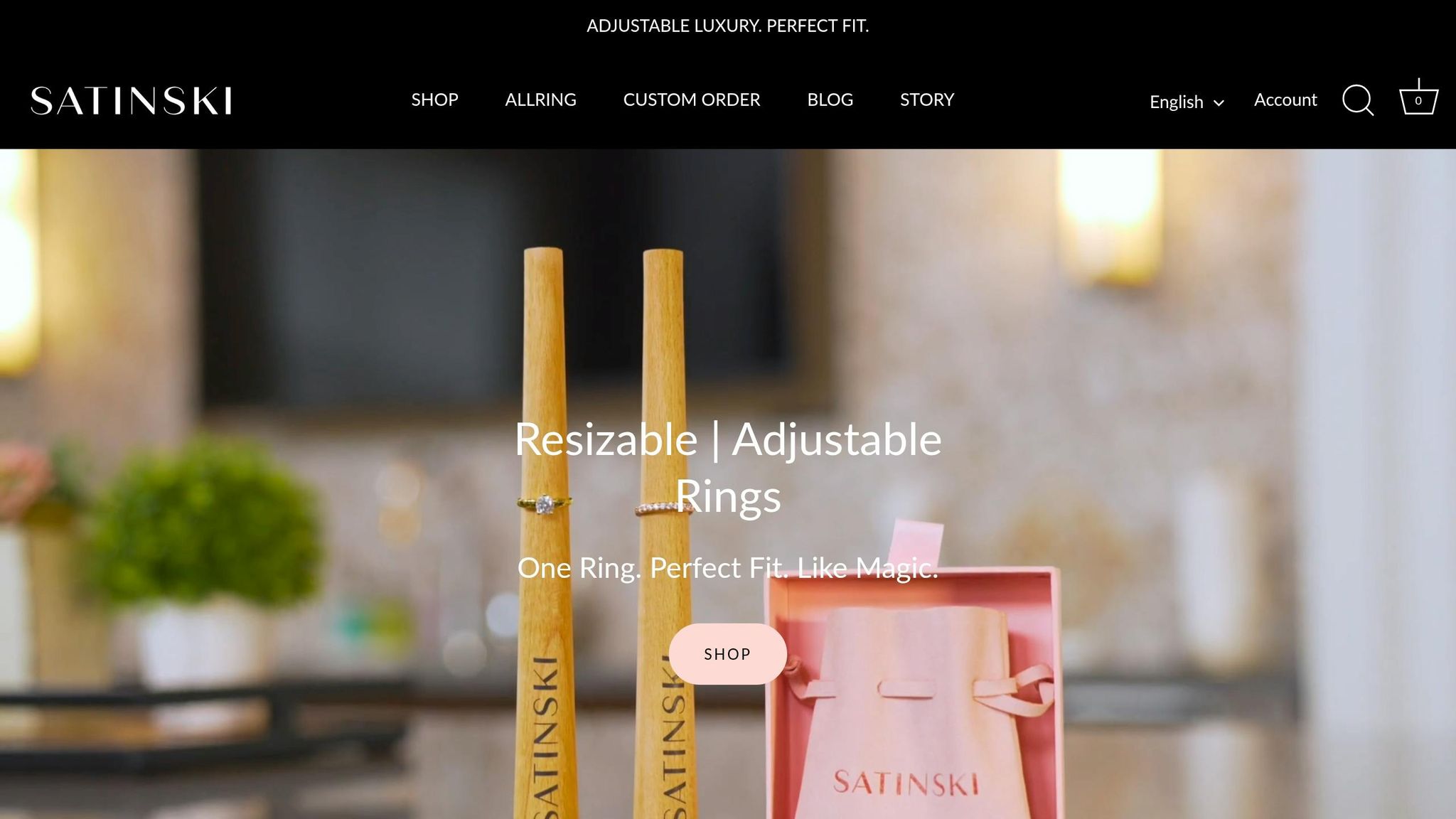
Satinski makes adjustable rings with a hidden adjustment mechanism, so the ring still looks like a standard band. These rings cover U.S. sizes 5–9 and can be adjusted at home with the included sizing stick.
With three weeks left, that can mean no jeweler visit, no extra delay, and no last-minute changes. Pricing starts at $70 for standard styles and $90 for engagement ring designs, in sterling silver and 18K gold.
A Satinski adjustable ring can handle the ceremony and daily wear after that, while the original ring is resized without a wedding deadline hanging over it.
Pick the Safest Fix This Week and Avoid Another Sizing Problem
A Simple Decision Guide: Fit Problem, Ring Type, and Time Left
If you already know the ring is loose, tight, or unsafe, use this table to pick a path now. With 3 weeks left, try to keep jeweler work within 10–14 days and leave a few extra days for pickup and one last fit check.
| Fix | Turnaround Time | Est. U.S. Cost | Permanence | Best Use Case | Risk to Original Ring |
|---|---|---|---|---|---|
| Temporary adjuster (silicone/plastic) | Same day to 1–2 days | About $5–$30 | Temporary and removable | Slightly loose ring, simple band or solitaire, less than a week left | Low; can trap moisture or scratch if dirty or loose |
| Sizing beads or ring guard (jeweler-installed) | 1–7 days | About $30–$100 | Semi-permanent; can usually be removed or adjusted | Moderately loose ring, complex setting, fingers that fluctuate | Low to moderate; the band changes, not the center setting |
| Rush professional resizing | 2–14 days | About $60–$200+ (plus a 25–50% rush surcharge) | Permanent band change | Ring significantly too tight or too loose when the design allows safe resizing and you have at least a week | Moderate to high for pavé, eternity, or tension settings; potential for a weakened band or stone loosening if done improperly |
| Stand-in ring | Same day to a few days | About $30–$300+ | Temporary for the ceremony and photos | Original ring in repair or unsafe to resize in time | None - the original ring stays protected |
| Adjustable ring (e.g., Satinski) | Immediate if already owned; shipping if ordered now | About $250–$1,390 depending on material | Built to adjust as finger size changes | Fluctuating finger size, tight deadline, or when resizing isn't possible | Low; the ring is built to adjust, though converting a fixed ring may require professional work |
Here’s the one timing rule that matters most: if your jeweler can’t give you a firm pickup date at least 3–4 days before the wedding, full resizing is too much of a gamble. In that case, move to a stand-in or an adjustable ring.
How to Store and Protect the Ring While You Wait
Once you choose a fix, stop test-wearing the ring and put it away safely until the work is done.
If the fit is off, daily wear just adds risk. A tight ring can get harder to remove. A loose ring can slip off when you least expect it. Store it in a ring box or pouch inside a secure drawer, safe, or lockbox. Keep it away from sinks, hot cars, and any spot a pet or small child could get to.
If the ring is going to a jeweler for rush work, ask for a written job ticket. Take photos of the ring before you hand it over, and keep the paperwork at home. It’s a small step, but it can save a lot of stress later.
Don’t bend, cut, or tape the band yourself. DIY fixes with pliers or household glue can warp the metal, trap moisture, and loosen stones. That kind of damage is often harder to deal with than the sizing issue you started with.
Key Points to Act on Before the Ceremony
With the ring stored safely, make the call today.
Use your final fit check to choose the lowest-risk fix that still works for your timeline. If the ring is only a little loose and the wedding is days away, a temporary silicone adjuster is often the simplest move. If the ring is tight, get fast help from a jeweler - but only if they’ll put the completion date in writing. If safe resizing just isn’t possible before the ceremony, a stand-in ring or a Satinski adjustable ring can keep the day moving while your original ring gets the care it needs.
FAQs
How do I know if my ring is safe to wear right now?
Check the fit. A ring is too tight if it leaves red marks, causes indentations, feels numb, or cuts off circulation, especially after exercise or in warm weather.
A ring is too loose if it spins, slides off too easily, or feels like it could fall off. If you notice any of these signs, it is not safe to wear right now. A poor fit can lead to discomfort, damage, or loss.
Can a jeweler resize my ring in time for the wedding?
Yes, a professional jeweler may be able to resize your ring in time. But it depends on the ring’s design and materials.
Traditional resizing can take anywhere from a few days to several weeks. That’s why it’s smart to ask a jeweler as soon as possible if the ring can be resized safely.
Some styles are harder to adjust than others. Rings with continuous engravings, tension settings, or eternity bands may not be good candidates for resizing at all.
If your wedding is three weeks away, confirm the turnaround time before you move ahead.
What should I do if my ring style can't be resized?
If your ring can't be resized because of its design or material, a temporary fix can still do the job.
For a loose ring, you have a few simple options:
- Clear plastic or silicone adjusters
- Ring guards
- Professional sizing beads
If the ring feels too tight, don't force it. Wear it on a secure chain as a necklace instead.


