

Green, Grey, and Champagne Moissanite: Colored Stone Guide
If I had to sum it up fast: green stands out most, grey is the quietest, and champagne is the warmest. For most U.S. buyers, the best pick comes down to lighting, metal color, skin tone, and how bold you want the ring to look.
Moissanite is a lab-grown stone made from silicon carbide. It is very hard, shows strong sparkle, and its color usually stays stable in normal wear. Finished moissanite rings often sell for about $150 to $1,800+, and a 1-carat green moissanite often lands around $200 to $600.
Here’s the short version:
- Green moissanite: best if you want more color and a ring that gets noticed
- Grey moissanite: best if you want a cooler, softer, lower-key look
- Champagne moissanite: best if you want warmth, gold tones, and a vintage-style feel
- Daylight vs. indoor light matters: all three can shift, but green and champagne tend to show it more
- Metal changes the look: white metals cool stones down, while yellow and rose gold make them look warmer
- Low light can change depth: dark green may look near-black, and some grey stones can look flatter at night
My main takeaway: don’t buy based on photos alone. Check the stone in daylight, warm indoor light, and office LED light before you decide.
Quick Comparison
| Color | Overall feel | Best metal match | Main watch-out | Best for |
|---|---|---|---|---|
| Green | Bold, nature-led, more expressive | White gold, platinum, yellow gold, rose gold | Can shift a lot with lighting; coated stones may wear down | Statement rings, floral or custom styles |
| Grey | Cool, clean, modern | White gold, platinum, sterling silver | Can look darker or less lively in low light | Daily wear, solitaires, bezel rings |
| Champagne | Warm, soft, vintage-leaning | Yellow gold, rose gold, mixed metals | May look off-white to some buyers; tone can vary a lot | Halo rings, antique cuts, romantic styles |
So if you want the short answer: pick green for color, grey for a cool modern look, and champagne for warmth. Then match it with the metal and lighting you live with every day.
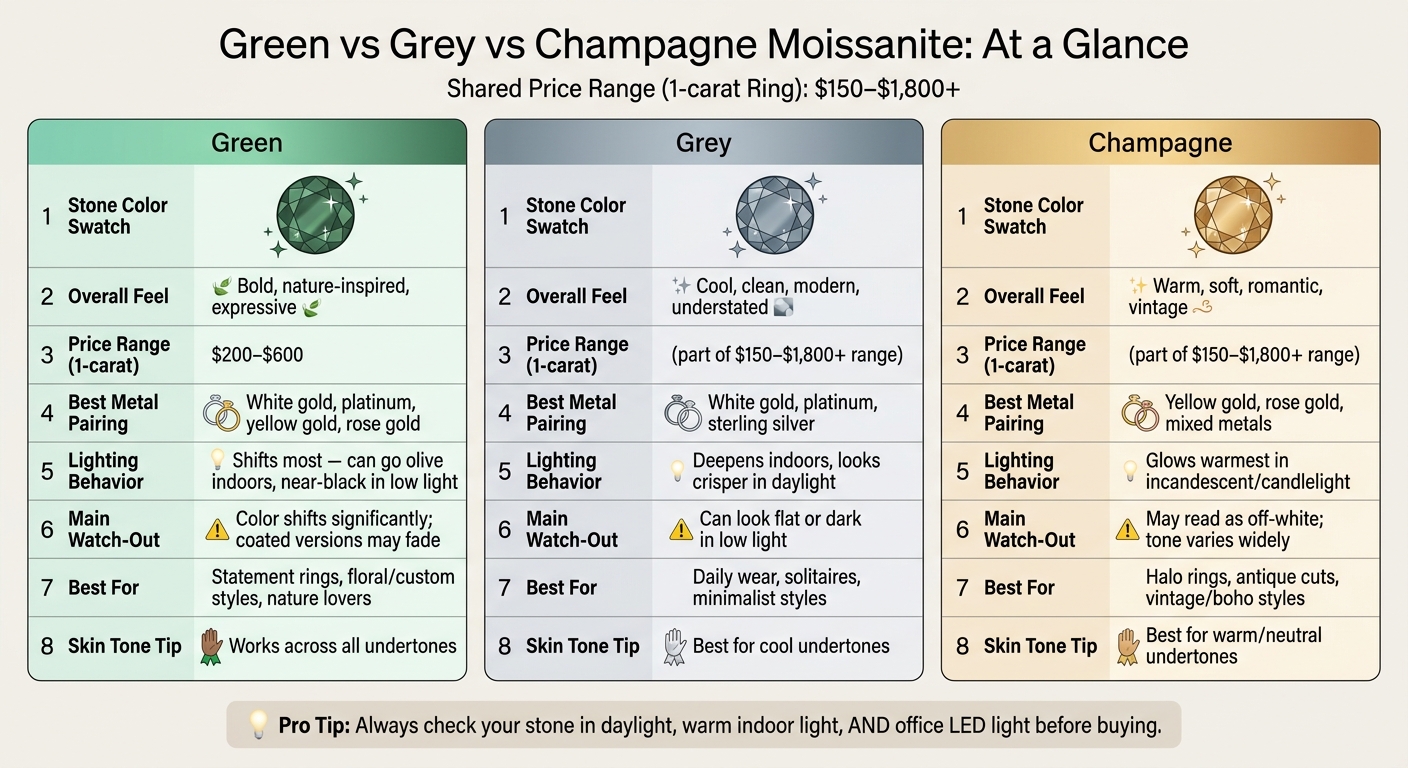
Green vs Grey vs Champagne Moissanite: Which Color Is Right for You?
1. Green Moissanite
Color Appearance
Green is the boldest of the three. Green moissanite can range from soft mint and seafoam to sage, teal, and deep forest green. The shade you notice often comes down to carat size and cut. Smaller stones usually look lighter, while larger stones and brilliant cuts tend to show richer color. Step cuts like emerald and Asscher display the color in a more even, calm way.
Lighting Behavior
Light changes this stone more than many people expect.
In natural daylight, mint and mid-green stones look clean, crisp, and a little cool. At times, they can pick up a faint blue cast. Under warm household lighting at around 2,700–3,000K, those same greens may shift toward olive or yellow-green. In bright LED or fluorescent light, the stone’s strong sparkle and rainbow flashes can make the green look more vivid and sharp. In low light or evening settings, lighter mint stones usually keep their color well. Very dark forest greens, though, can start to look almost black from some angles, especially in smaller sizes.
Style and Symbolism
Mint and pastel greens fit minimalist solitaires and stacking bands with ease. Sage works well in organic settings. Forest green has a luxe, vintage feel and pairs nicely with halo or Art Deco designs.
Green moissanite is often linked to growth, renewal, balance, and prosperity. That makes it a strong fit for engagement and wedding jewelry. It also draws shoppers who want a stone that lines up with eco-minded values.
Best Use and Pairing
For engagement rings, medium to forest green usually works best as the center stone. Metal choice changes the look quite a bit:
- White gold or platinum keeps the color cool
- Yellow gold pushes it warmer, closer to olive
- Rose gold adds contrast, especially with forest green
For everyday or stacking rings, mint and pastel greens work well in bezel or low-profile prong settings because they’re comfortable and easy to wear. Mint tends to look brightest on fair skin. Cooler mint tones stand out nicely on olive and medium skin. Saturated forest green pops on deep skin.
A 1-carat green moissanite usually costs $200–$600.
Next: grey moissanite, which reads cooler, softer, and more understated.
sbb-itb-9da40c1
Everything you need to know about colored moissanite. Is it permanent or temporary?
2. Grey Moissanite
Where green feels bold, grey is the quietest of the three.
Color Appearance
Grey moissanite comes in a broad range of shades. At the lighter end, you’ll see soft dove grey and silver-grey. In the middle, the color leans smoky. At the darkest end, it moves into deep charcoal and steel grey.
A lot of grey stones also show faint bluish or cool undertones. That’s part of what makes them feel different from colorless moissanite, which looks icy white, and champagne moissanite, which leans warm with golden or honey tones.
Most grey moissanite is color-through, so the color stays stable and does not fade over time.
Lighting Behavior
Grey moissanite changes in a noticeable way under different lighting.
On an overcast day, it tends to look lighter and softer. The color can take on a slightly warmer, silver-like cast, and the sparkle looks more diffused. In bright outdoor sun or open shade, the cooler side of the stone comes out more clearly. Bluish and steel undertones step forward, which gives it a crisp, modern look. Indoors under warm incandescent bulbs, the stone usually deepens into a richer, moodier charcoal. Under cool LED or fluorescent office lighting, it appears cleaner and more neutral.
At night indoors, grey moissanite often looks darker and smokier. Daylight, by contrast, brings out more depth and more visible color shift.
That changing tone is a big reason metal choice matters so much.
Style and Symbolism
Grey moissanite feels sleek, sophisticated, and a little off the beaten path. Lighter misty grey can seem calm and understated, a bit like fog or soft cloud cover. Darker charcoal shades feel stronger and more individual.
In US jewelry culture, grey moissanite is gaining ground in alternative engagement rings and modern bridal styles. Grey also suggests nuance and complexity, which appeals to people who want something nontraditional without going flashy.
Best Use and Pairing
For engagement rings, grey moissanite works very well as a center stone for buyers who like the look of a salt-and-pepper diamond but want more brilliance and fire. That also makes it a strong pick for custom and adjustable rings meant for daily wear. For everyday styling, its neutral color helps it move easily from casual outfits to dressier settings, especially in solitaires or clean, minimal designs.
Metal pairing can change the whole mood of the stone:
| Grey Shade | Best Metal Pairing | Effect |
|---|---|---|
| Misty / light grey | White gold, platinum, palladium | Airy, icy |
| Medium smoky grey | Mixed metals, darker white gold, or yellow/rose gold accents | Warm–cool contrast |
| Charcoal / dark grey | Black rhodium, mixed metals | Bold, dramatic, high-contrast |
Skin tone and metal choice often shape the final look more than the grey shade by itself.
On fair skin, light grey set in white metals can look airy and almost ethereal, while charcoal in darker settings creates sharp contrast. On medium and olive skin, both misty and medium greys tend to sit well, with the cooler tone balancing the skin’s natural warmth. On deep skin tones, charcoal and steel grey in white gold or platinum create a bright contrast that stands out nicely.
3. Champagne Moissanite
Grey has that cool, smoky look. Champagne goes in the other direction. It feels softer, warmer, and of the three, it's the warmest option.
Color Appearance
Champagne moissanite ranges from pale honey and straw to amber and cognac. Mid-range stones tend to read like caramel or light whiskey - golden-brown without looking yellow or muddy. Compared with yellow moissanite, champagne looks more muted. Compared with brown stones, it holds onto more light and sparkle.
Lighting Behavior
Champagne moissanite reacts strongly to light, so what you see in one setting may shift in another. In daylight, you get the clearest read on color: pale champagne looks like soft golden straw, while cognac shows up as a rich amber-brown. Under cool LED light, lighter stones can look almost neutral golden. Under incandescent bulbs, honey tones deepen and cognac shades take on a richer feel. In candlelight or other very warm, low-light settings, the stone can look much warmer and almost antique. That's why it's smart to compare it in daylight and warm indoor light before you decide.
Style and Symbolism
Champagne moissanite gives off warmth and understated elegance. Its golden-brown palette adds a soft, vintage-inspired glow that can feel festive without being loud. Lighter shades come across as bright, cheerful, and quietly refined. Deeper cognac shades lean more earthy and sensual. It fits naturally with vintage, boho, and romantic bridal styles.
Best Use and Pairing
For engagement rings, wedding bands, and anniversary jewelry, champagne moissanite looks especially good in cushion, oval, and antique cuts like old mine or old European. Those cuts tend to play up the stone's warm character under indoor light. Round brilliants are also a strong pick if you want to maximize fire and show the honey tone evenly across the table.
Metal choice changes the whole feel of the ring:
| Champagne Shade | Best Metal Pairing | Effect |
|---|---|---|
| Light honey / pale straw | Yellow gold, rose gold | Warm, cohesive, soft glow |
| Medium amber / caramel | Rose gold, mixed metals | Romantic, feminine, vintage |
| Deep cognac | Yellow gold bezel, white gold or platinum band | Bold contrast, modern structure |
Skin tone matters too, especially if you'll wear the ring every day. On fair or cool-toned skin, light champagne in yellow or rose gold adds gentle warmth without taking over, while white gold or platinum gives a crisp contrast. On medium or neutral skin tones, medium champagne in yellow or rose gold often looks naturally in sync, and deeper cognac can feel striking and luxurious in vintage-style settings. On olive or deep skin tones, richer champagne or cognac shades in yellow or rose gold tend to glow and read as intensely warm.
These differences matter most when you're picking the shade that fits your ring style, metal, and day-to-day wear.
How to Pick the Right Colored Moissanite for Your Ring
After looking at all three shades, narrow your choice by focusing on undertone, style, and metal.
Start with undertone, but don’t treat it like a hard rule. Warm undertones often look great with champagne moissanite, cool undertones tend to suit grey, and green can work across undertones when you want the ring to stand out more. So use undertone as a guide, then think about saturation and how bold you want the stone to look.
Grey feels modern and understated. Champagne leans warm and romantic. Green is the most expressive of the three. That difference matters in day-to-day wear, because some rings quietly blend in while others make their presence known.
Metal choice changes the look more than many people expect. Yellow gold adds warmth to champagne and gives green a more earthy feel. White gold or platinum makes grey look sharper and cools down green. Rose gold brings extra warmth to champagne and adds contrast to green.
Here’s a quick way to match your priorities to the right option:
| If you want… | Best moissanite color | Best metal pairing | Best ring type |
|---|---|---|---|
| A warm, vintage, or romantic look | Champagne | Yellow or rose gold | Engagement-style or halo ring |
| A modern, minimal, or architectural vibe | Grey | White gold, platinum, or sterling silver | Solitaire or bezel ring |
| A nature-inspired or expressive look | Green | Yellow gold or rose gold | Leaf, floral, or custom statement ring |
| A crisp, high-contrast style | Green | White gold or platinum | Halo or cathedral setting |
| A versatile everyday ring | Grey | White gold, platinum, or sterling silver | Adjustable ring |
Before you decide, check the stone in daylight, warm indoor light, and office lighting. Color can shift a lot from one setting to another. The best test is simple: how does it look in the light you actually live in?
If you’re looking at a custom or adjustable ring, price usually depends more on the metal and how complex the setting is than on the stone color.
The next section breaks down the pros and cons of each color.
Pros and Cons of Each Color
Each shade comes with trade-offs. That makes the choice a lot easier once you look at three things: how it looks, how it handles light, and how much upkeep it needs.
Green moissanite gives you bold color and a look that stands out. The catch is lighting. Green stones can shift between daylight and indoor light, so the color you see at noon may not be the same one you notice at dinner. It can also look less saturated in person than it does in photos. If the stone is coated, there’s one more thing to watch for: that surface treatment may fade or peel over time with cleaning chemicals or frequent water contact.
Grey moissanite is the steadiest and most low-key option. It works with almost anything and has a modern feel without trying too hard. In most cases, the color runs through the stone, which helps the shade stay even. Grey also tends to give off more white flashes than rainbow sparkle, so it suits people who want a quieter look. The downside? In low light, a grey stone can seem a little flat if the cut isn’t strong.
Champagne moissanite tends to shine most in warm evening light. It has a soft, romantic feel, but it can throw people off if they’re expecting a colorless stone. Some buyers may see it as off-white instead of a clear style choice. And the depth can vary quite a bit. One stone may show only a hint of warmth, while another leans closer to rich cognac.
Choose the shade that still feels right in the light where you’ll wear it most.
Here’s the fastest way to compare them.
| Stone | Key Pros | Key Cons | Best-Fit Buyer |
|---|---|---|---|
| Green | Strong color payoff, one-of-a-kind look | Shifts under different lighting; coated versions may fade | Statement rings, nature-inspired styles |
| Grey | Consistent color, easy to pair, modern | Can look flat in low light | Minimalist styles, everyday wear |
| Champagne | Warm and romantic, glows in evening light | May look off-white to buyers who want a colorless look; depth varies | Vintage or boho rings, gold settings |
Conclusion
Green, grey, and champagne moissanite each bring a different mood. Green feels bold and nature-inspired. Grey looks clean and modern. Champagne has a warm, vintage feel. The best pick isn’t just about the stone on its own. It’s about how that color works with your day-to-day life.
Try to match the shade with your usual lighting, your skin’s undertone, and the metal you wear most. Champagne with rose gold feels romantic and timeless. Grey with platinum looks sharp and current. Green with yellow gold gives off an earthy, expressive look.
Before buying a custom or adjustable ring, look at the stone in daylight, warm indoor light, and office or LED light. That last check is often the simplest way to spot the shade you’ll enjoy seeing every day. If this is a ring you plan to wear often, go with the color that looks best in your actual lighting, not just in photos.
FAQs
Which moissanite color looks best on my skin tone?
Consider your undertones. If your skin has cool undertones, green or grey moissanite can look especially good against your complexion.
If your skin has warm undertones, neutral or champagne moissanite often pairs well, especially in gold settings, and gives off a polished, easy-to-wear look. At the end of the day, the best pick is the shade that feels most flattering and matches your personal style.
How much does lighting change green, grey, or champagne moissanite?
Lighting can make green, grey, and champagne moissanite look quite different from one setting to the next. Natural daylight usually gives you the clearest sense of the stone’s actual color. Move that same stone indoors, though, and the shade can look softer, darker, or a bit different altogether.
Stone size plays a part too. Larger moissanite stones may show slight yellow or green hints under certain types of light. That’s why it helps to check the stone in more than one setting before you decide.
A simple way to do that is to view it under:
- Natural daylight
- Warm indoor lighting
- Cool indoor lighting
Color can be a little slippery, and what looks perfect in one room may feel different in another.
Which metal makes each moissanite color look its best?
Choose the metal based on how its tone works with the stone’s color:
- Green moissanite: platinum or sterling silver for a clean, balanced look
- Grey moissanite: platinum or sterling silver to bring out its steely tone
- Champagne moissanite: 18K gold or rose gold to play up its warm, vintage-inspired glow


