

Menopause and Finger Swelling: Why Your Rings Stopped Fitting
If your rings suddenly feel tight during perimenopause or menopause, swelling is often the reason - not a permanent ring size change. I’d treat it as a safety issue first: take rings off early, watch for patterns for 1–2 weeks, and get medical help fast if swelling is one-sided, painful, sudden, or comes with numbness or color change.
Here’s the short version:
- Hormone shifts can affect fluid balance, which can make fingers swell during the day.
- Heat, salty meals, exercise, and hand use can make rings feel tighter by evening.
- If the fit changes from morning to night, that often points to temporary swelling.
- If swelling is firm, lasts, or affects one hand or one finger, it may be something else, like arthritis, injury, infection, or a circulation problem.
- A ring that is hard to remove can become unsafe if swelling gets worse.
A few quick clues can help:
| What I notice | What it may mean | What I’d do |
|---|---|---|
| Ring is loose in the morning, tight at night | Day-to-day fluid retention | Track it and remove the ring earlier |
| Light mark that fades fast | Mild swelling | Watch and wait before resizing |
| Ring won’t move well | Swelling may be building | Use soap, cool water, and remove it |
| Finger turns blue, pale, cold, or numb | Blood flow problem | Get emergency care now |
A simple fit log can help too. If I wrote down ring comfort at 8:00 a.m. and 8:00 p.m. for 7–14 days, I’d have a much better sense of whether I’m dealing with temporary puffiness or a size change that may call for a jeweler.
The big point: don’t force a tight ring. Jewelry can wait. Your finger can’t.
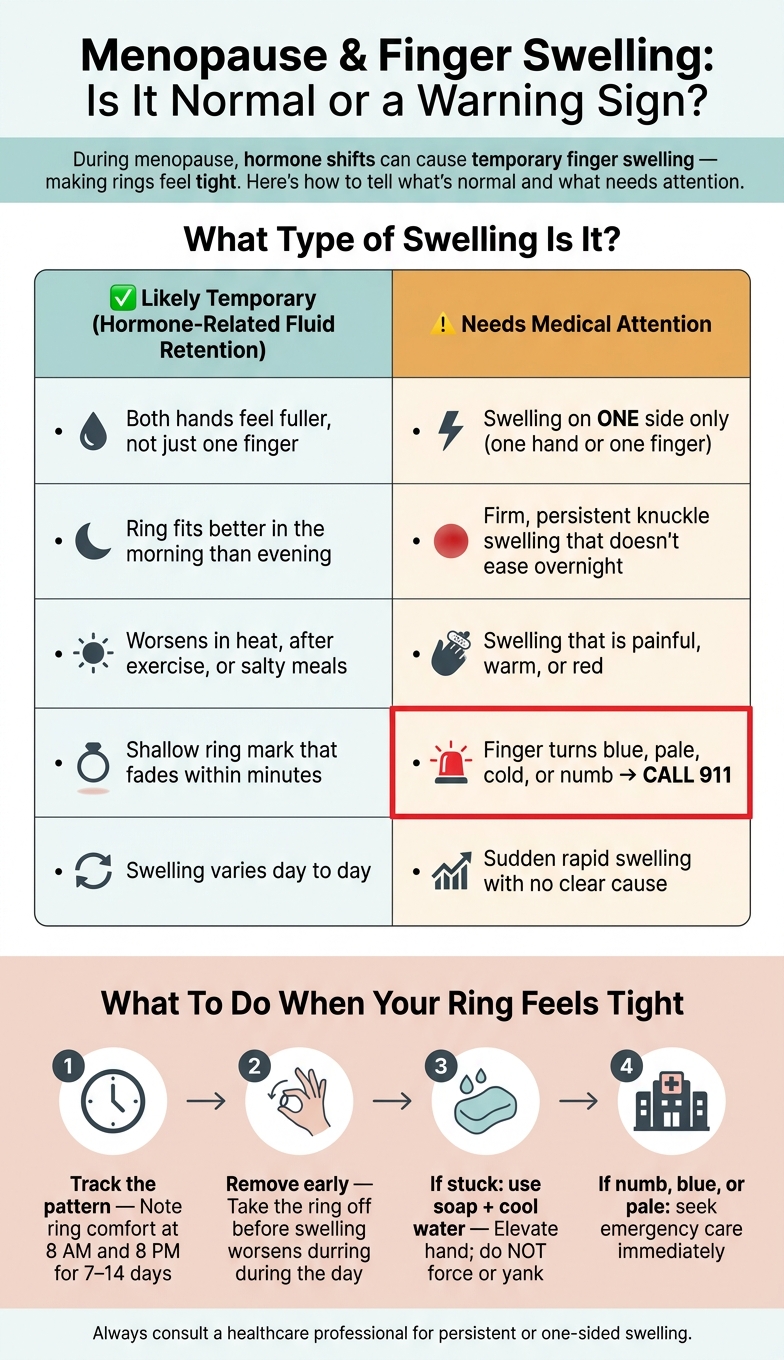
Menopause Ring Swelling: Warning Signs vs. Normal Swelling at a Glance
Why menopause can make rings feel suddenly tight
During perimenopause and menopause, shifts in estrogen and progesterone can change how the body handles fluid. The result? Fingers may get puffier, and rings that used to slip on without a second thought can start to feel tight.
In many cases, this points to fluid retention, not a lasting change in ring size. You’ll often notice it in small, everyday ways: the ring slides less easily, catches at the knuckle, or leaves a mark after you take it off.
Heat, salty foods, and a long day of using your hands can make the swelling stand out more, especially later in the day.
How finger swelling shows up in everyday ring wear
A ring may start to feel snug, leave an indent, or catch at the knuckle. If it fits better after a night’s sleep or after your hands have been elevated for a while, that usually points to fluid retention instead of a lasting size change.
Temporary puffiness, joint changes, and warning signs to watch for
Not all finger swelling means the same thing. That’s why it helps to look at the pattern.
General puffiness that comes and goes during the day - worse in the heat, better after rest - fits more with fluid retention. Firm knuckle swelling that doesn’t ease overnight may point to osteoarthritis or another joint issue rather than hormone-related fluid changes.
Some signs should not be brushed off as menopause and need prompt medical attention:
| Pattern | What it may suggest | What to do |
|---|---|---|
| General puffiness that varies during the day | Temporary fluid retention, possibly hormone-related | Track patterns; remove rings before swelling worsens |
| Firm, persistent knuckle swelling | Possible osteoarthritis or joint condition | Arrange a medical evaluation |
| Swelling on one side only, or sudden rapid swelling | Injury, infection, or circulation issue | Seek medical care promptly |
| Blue or pale skin, numbness, severe pain, or inability to bend the finger | Possible circulation problem | Treat as urgent; get medical help immediately |
Before resizing a ring, pay attention to when the swelling shows up and how fast it changes. If swelling is new, affects only one side, gets worse fast, hurts, or comes with skin color changes or numbness, the issue calls for medical care - not a jewelry fix.
sbb-itb-9da40c1
How hormones, water retention, and circulation affect finger size
If your ring fit changes during the day instead of staying the same, hormones and fluid balance are often part of the story.
Estrogen and progesterone help regulate sodium and water balance. When those hormone levels shift and drop during menopause, fluid can build up in the hands and fingers. That can make a ring feel fine in the morning, then snug by evening.
Heat, exercise, and simply keeping your hands below heart level can also make swelling worse later in the day. And if a ring is already tight, it’s smart to take it off before the swelling gets worse.
A few simple things can help bring swelling down:
- Cool your hands
- Move your fingers
- Elevate your hand
Signs that swelling is affecting your ring fit
Fluid-related swelling often follows a pretty clear pattern. If most of these signs match what you’re noticing, temporary fluid retention is a likely reason your ring fit has changed:
| Sign | What to look for |
|---|---|
| Symmetry | Both hands feel fuller, not just one finger |
| Timing | Rings feel tighter in the afternoon or evening than in the morning |
| Triggers | Fit worsens in hot weather, after exercise, or after salty meals |
| Ring mark | A shallow indentation that fades within minutes of removing the ring |
It also helps to track ring comfort for 1–2 weeks. Write down the time of day, weather, activity, salty meals, symptoms, and how the ring feels. That kind of record can make the pattern much easier to spot. It can also help you figure out whether it makes sense to wait before resizing, use short-term fixes, or get checked by a clinician.
Other causes of finger swelling to keep in mind
Menopause can play a role in finger swelling, but it’s not the only cause.
Some medicines can lead to fluid retention too, including blood pressure drugs, steroids, diabetes medicines, hormone therapy, and some pain relievers. If your rings started feeling tighter after you began a new medication or changed your dose, ask your prescriber or pharmacist if swelling could be a side effect. But don’t stop a prescribed medication on your own.
Other health issues can also cause swelling, including thyroid disease, arthritis, infection, injury, and heart, kidney, liver, vein, or lymphatic problems. If you have hand swelling along with swelling in the feet, face, or around the eyes - or if swelling comes with shortness of breath or chest pain - you need medical evaluation, not a jewelry fix.
Sudden swelling after contact with a possible allergen, especially with facial swelling or trouble breathing, calls for emergency care.
How to check whether swelling is changing your ring fit
Once you know when swelling tends to happen, you can use that pattern to figure out what to do next: keep an eye on the ring, make a short-term change, or remove it right away. If you're thinking about resizing or replacing a valuable ring, track the fit for 1–2 weeks first.
How to track ring comfort before resizing
Use the same ring, on the same finger, at the same times each day. That kind of simple fit log can show a clear pattern within 1–2 weeks.
For example: 8 a.m.: comfortable; 8 p.m.: snug after heat and a salty meal.
Write down the time, how the ring feels, how easy it is to remove, and whether you notice swelling or skin marks. It also helps to note whether the ring slides over the knuckle with gentle pressure, rotates as usual, or leaves a short-lived mark.
If your log shows the ring is getting tighter over time, take it off earlier in the day. A ring that's hard to remove all day is not the same as one that loosens overnight. Hold off on resizing until the pattern settles. If you resize during an active swelling episode, the ring may end up feeling too loose once the swelling goes down.
When a tight ring becomes a safety problem
Tracking patterns helps, but safety comes first when a ring stops moving easily.
A ring should never cause persistent pain, numbness, tingling, broken skin, or a deep groove that does not quickly fade after removal. Remove a ring as soon as it feels tight or harder to remove than usual.
If the ring is already stuck, stop pulling. Elevate your hand and try a small amount of soap or lubricant. If that doesn't work, or if the finger becomes blue, pale, cold, or numb, seek immediate help from urgent care or an emergency department. Call 911 if the finger turns blue, pale, cold, or numb. A trapped ring can cut off circulation and needs professional removal.
| Situation | What to do |
|---|---|
| Ring feels snug in the evening, loose in the morning | Track the pattern; remove the ring earlier in the day |
| Ring leaves a shallow mark that fades quickly | Monitor; wait to resize until the pattern is stable |
| Ring is difficult to remove but finger looks normal | Remove early using soap; store safely |
| Ring is stuck; finger is numb, blue, or pale | Seek emergency care immediately |
If the fit keeps changing, the next step is choosing a ring option that can change with you.
Ring options for a changing finger size
Once you know the swelling is changing rather than dangerous, start with the least permanent fix. In plain terms: use a temporary option first, resize only after your size settles, or store the ring for now.
That matters because menopause-related swelling can shift up and down. So in many cases, reversible options make more sense at the start. The right choice depends on two things: how steady the swelling is and how much the ring matters to you.
Temporary fixes, professional resizing, and safe storage
If swelling comes and goes, a temporary adjuster can help the ring fit better without changing the metal. Common options include a silicone coil, sizing strip, or ring guard. These can cut down on spinning and make the ring feel more secure, but they work best as a short-term fix.
There are a few trade-offs. A temporary adjuster can trap moisture, bother the skin, or sit unevenly under a detailed setting. Clean and dry the ring before putting one on. Then pay attention to how your finger feels. If you notice pressure, irritation, numbness, or discoloration, take it off.
If your finger size has stayed fairly steady for a while, professional resizing may be the better long-term move. Before you do that, ask a qualified jeweler to inspect the band, prongs, setting, stones, engraving, and any past repairs. That step matters even more with detailed rings, since heat and pressure can loosen stones, change the shape of the shank, or affect the setting. In some cases, a jeweler may suggest sizing beads or an interior sleeve instead of cutting the band.
If the ring is important to you but feels uncomfortable right now, safe storage is often the smartest call. Put it in a padded, labeled jewelry box or a soft pouch, away from other pieces that could scratch it. Take a photo and make a note of its condition before storing it. While you wait for your size to settle, a plain placeholder band or adjustable ring can handle daily wear.
For everyday use, adjustable rings can help you avoid resizing the same ring again and again.
| Method | Best use | Advantages | Limitations | Safety considerations |
|---|---|---|---|---|
| Temporary adjuster (coil, guard, or strip) | Short-term or fluctuating swelling | Low cost, reversible, and avoids metal work | May trap moisture, irritate skin, or slip | Remove it if it causes pressure, numbness, or discoloration |
| Professional resizing or partial sizing | Stable, consistent size change | Long-lasting, discreet result; a jeweler may use sizing beads or an interior sleeve instead of cutting the band | Permanent alteration; not suitable for all designs | Have a jeweler inspect the setting, stones, and prongs first |
| Safe storage | Ring is uncomfortable or unsafe to wear | Protects the finger and the jewelry | Ring unavailable for daily wear | Store it dry, padded, labeled, and secure |
Adjustable and resizable rings for day-to-day size changes
If your ring size shifts during the day, adjustable designs can be a practical answer. Instead of resizing over and over, you get a ring that can handle normal ups and downs, whether that happens from morning to evening or from season to season.
Satinski's adjustable and resizable rings come in sterling silver and 18K gold, with discreet adjustment mechanisms that keep the design clean. Styles include everyday wear, engagement, wedding, and stacking options. Their adjustable rings are designed to fit approximately U.S. sizes 5–9 (about EU 49–59).
If your size falls outside that range, contact Satinski directly before ordering and share your measured finger circumference or professional ring size. Also confirm that the mechanism can safely fit your size and whether returns or exchanges are available. Before buying, check the exact material, finish, stone details, care needs, and adjustment method for the specific design.
One more thing: an adjustable ring should never be tightened enough to leave an indentation or limit circulation. It can help with fit, but it is not a substitute for medical care if swelling is sudden, severe, one-sided, painful, or persistent.
Conclusion: Prioritize comfort, protect your rings, and watch for unusual swelling
Menopause can lead to temporary finger swelling, but a tight ring doesn't always mean your ring size has changed for good. This kind of swelling often shifts with heat, salt, activity, and even the time of day. If your fit log shows a clear pattern, it's usually smarter to treat the swelling as temporary unless it stays the same day after day.
If your ring fits well on some days but feels snug on others, play it safe. Store it in a secure place and wear an adjustable ring until the swelling calms down. Permanent resizing makes more sense after your size has stayed steady for a while.
Not all swelling is tied to menopause. Sudden swelling, swelling on one side only, swelling that lasts, or swelling that hurts - especially with redness, warmth, numbness, or weakness - should be checked by a healthcare professional. Persistent, one-sided, or painful swelling needs medical attention.
A stuck ring can turn into a medical issue once circulation starts to change. If a ring becomes hard to remove, don't yank or force it. If gentle removal doesn't work and your finger starts to look unusually pale, bluish, or gray, or if you notice numbness or rising pain, get help right away from urgent care or an emergency department.
Put circulation and comfort ahead of keeping a ring on. Track the pattern, take rings off early, and switch to flexible jewelry when swelling comes and goes. Jewelry can be resized later, once your size has settled.
FAQs
Can menopause really change my ring size?
Yes. Menopause can change your ring size because hormone shifts often lead to fluid retention and swelling in the fingers. That can make rings feel tight, stuck, or just plain uncomfortable.
A lot of women notice that rings that used to fit fine suddenly don’t anymore. If the swelling or discomfort keeps happening, talk with a healthcare professional. It may also help to look into flexible jewelry options.
How do I know if finger swelling is temporary?
Finger swelling is often temporary when it’s tied to short-term triggers like hot weather, exercise, eating a lot of sodium, or normal hormonal shifts. In many cases, it goes down on its own once your body cools off, rests, or gets back to normal.
It’s usually short-lived if it gets better with rest, cooling, or keeping your hands elevated. See a medical professional if it sticks around, gets worse, or shows up with joint pain, stiffness, fatigue, or numbness.
When is a tight ring a medical emergency?
A tight ring can be a medical emergency when it starts cutting off blood flow. Get care right away if you notice numbness, tingling, or fingertips turning blue or white. You should also seek immediate help if the ring is stuck and causing steady pain, visible swelling, or discoloration.
If you’re pregnant, sudden or severe swelling in your hands, face, or feet also needs urgent medical care, especially if it happens along with intense headaches, vision changes, or pain under the ribs.


