

Rings During Chemotherapy: What Changes and How to Adapt
If a ring feels tight, leaves a deep mark, or your finger changes color, take it off now. During chemotherapy, finger size can shift within hours because of swelling, fluid changes, dry skin, and numbness. That means a ring that fit yesterday may not be safe today.
Here’s the short version:
- Tight rings can cut into swollen tissue and hide redness, cracks, or skin damage.
- Loose rings can slip off during handwashing, sleep, or exercise.
- Numbness or tingling can make pressure harder to feel, so a ring may cause harm before you notice it.
- Check your ring twice a day - morning and later in the day - because fingers often swell as the day goes on.
- Use lukewarm water and gentle twisting if a ring starts to stick. Do not force it.
- Get medical help right away if the finger turns blue, pale, cold, numb, or swells fast.
- Temporary options like a smooth silicone band, an adjustable ring, or a necklace ring holder may be safer during treatment.
A few facts matter here: hand-foot syndrome can cause redness, swelling, burning, cracking, and blisters, and a fever of 100.5°F (38°C) or higher with swelling is a reason to call your oncology team. In plain terms: comfort and blood flow come before jewelry.
If I were reducing this to one rule, it would be this: wear a ring only when it comes off easily, feels normal, and the skin underneath looks normal too.
How Chemotherapy Can Change Ring Fit and Comfort
Chemotherapy can change ring fit from one day to the next. Sometimes, it changes within the same day. The main drivers are swelling, fluid or weight shifts, and skin changes. The goal is simple: match the ring to what your finger is doing, not the other way around.
Swelling, Edema, and Daily Finger Size Changes
Chemotherapy can cause fluid buildup in the hands and fingers, also called edema. When that happens, a ring that felt fine in the morning can feel tight a few hours later. Less movement, treatment-related inflammation, and warm weather can all make swelling worse. Heat tends to make fingers puff up, while cold can make them stiff and tougher to size with any accuracy. Fingers also often get a bit larger later in the day, so treatment-related swelling can make that shift stand out more.
Don’t use ice-cold or very hot water to force a ring on or off. Lukewarm water and gentle movement are safer.
If swelling shows up on only one side, comes on all of a sudden, or doesn’t get better with rest, that’s not the same as normal day-to-day change. Report it to your oncology team.
Weight Changes and How They Affect Ring Fit
Fluid loss and weight loss can make a ring feel loose fast. You might notice the ring spinning after fluid loss, or suddenly feeling snug after weight gain or fluid retention. In many cases, these short-term fit changes are tied to fluid shifts, not a lasting change in body size.
That matters because both loose and tight rings can cause trouble:
- A loose ring can slip off during handwashing, sleep, or exercise.
- A tight ring can rub and irritate skin that may already be sensitive.
During active treatment, it’s usually better to avoid permanent resizing if the fit change may be temporary. A temporary adjustable option, or simply storing the ring in a safe place, is often the better move until things settle down.
Dry Skin, Sensitivity, Inflammation, and Numbness
Chemotherapy can dry and irritate the skin. Some treatments are also linked to hand-foot syndrome, which can cause redness, swelling, burning, tingling, cracking, peeling, or blisters on the palms. If you wear a ring over irritated skin, it can trap moisture, add friction, and make early warning signs harder to spot.
Nerve damage can add another issue: numbness or tingling. When feeling in the hands is reduced, you may not notice a ring rubbing, pinching, or pressing into the skin. That’s why it helps to remove the ring during symptom flares and check the skin underneath every day. If the skin is cracked or numb, what you see matters more than what you feel.
A good rule of thumb: take off tight rings when swelling or heat kicks in, avoid loose rings after fluid loss, and check your skin daily if dryness or numbness makes pressure harder to notice.
sbb-itb-9da40c1
When to Take Your Ring Off Right Away
When fit starts changing, don't wait until the ring feels impossible to tolerate.
Signs a Ring Is No Longer Safe to Wear
Take the ring off if it feels tight, painful, or stops rotating like it normally does. Pay attention to a deep indent, swelling above or below the band, tingling, numbness, or less feeling in the finger.
Pain isn't the only warning sign. Color and temperature matter too. If the finger looks pale, blue, gray, or mottled, or feels colder than usual, blood flow may be affected. Don't wait for intense pain. Swelling can ramp up fast, and once a ring starts acting like a clamp, getting it off becomes much harder.
It's also smart to remove the ring if sweat, lotion, or moisture is stuck underneath. The same goes for skin that looks red, raw, cracked, blistered, or sore.
Times to Remove Your Ring Before Problems Start
Take the ring off before any appointment or procedure that could affect your hand or finger. Check with your oncology or infusion team about whether rings should come off before each visit, especially if you'll have an IV, monitoring equipment, or another procedure. Go with the facility's instructions.
Remove all metal jewelry before an MRI and before surgery or other procedures when staff tells you to do so. If the ring won't come off, let the care team know before the scan or procedure starts.
At home, take it off before housework, gardening, lifting, or using tools. Do the same before exposure to extreme heat or cold, since temperature shifts can change finger size and make pressure easier to miss.
What to Do If a Ring Gets Stuck
If the ring won't slide off but the finger is still warm, normal in color, and not numb, stop pulling. Lift your hand above heart level to help bring swelling down. Add a small amount of soap or oil, then gently twist the ring toward the fingertip. If pain, swelling, color change, tingling, or numbness starts, stop right away.
Don't reach for pliers, knives, household cutters, or any improvised tool. Forcing the ring off, or wrapping the finger too tightly, can make swelling worse and removal harder. If gentle steps don't work soon, call your oncology team, go to urgent care, or head to the emergency department. Medical staff can remove the ring with a ring cutter when needed.
Get urgent care right away if the finger turns blue, pale, cold, numb, or swells fast.
If you still want to wear a ring during treatment, the next step is picking an option that can handle day-to-day finger changes.
How to Keep Wearing Rings Comfortably During Treatment
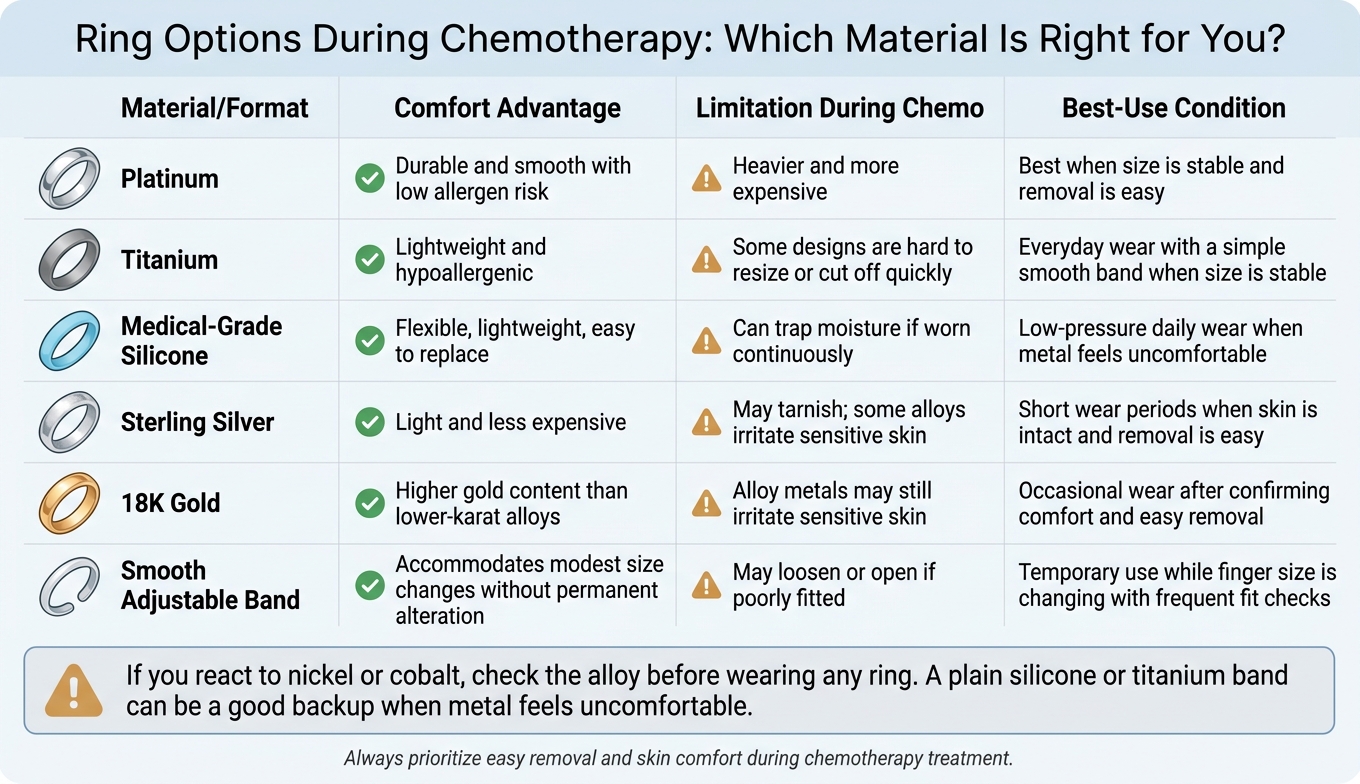
Ring Materials During Chemotherapy: Comfort & Safety Comparison
If you still want to wear a ring, pick one that can move with swelling instead of pressing against it.
Adjustable and Resizable Rings for Changing Finger Size
An adjustable ring can work for small day-to-day shifts in finger size. A ring that needs professional resizing is better saved for later, once your finger size has settled down.
Choose an adjustable ring that stays loose enough to come off easily. You should never have to force it. If it still feels snug, switch to a lighter material or stop wearing it on that finger.
It also helps to check the fit at two different times:
- Try taking it off in the morning
- Try again later in the day
Fingers are often smaller in the morning and larger later on, so this simple test gives you a better sense of whether the ring is still safe to wear.
Avoid permanent resizing during treatment. It makes more sense to wait until your finger size has stayed the same for a while before changing the ring.
Safer Materials and Everyday Ring Options
For day-to-day comfort, go with a smooth, lightweight band that comes off easily.
| Material or format | Comfort advantage | Limitation during chemotherapy | Best-use condition |
|---|---|---|---|
| Platinum | Durable and smooth with low allergen risk | Heavier and more expensive than other options | Meaningful ring when size is stable and removal is easy |
| Titanium | Lightweight and hypoallergenic | Some designs are difficult to resize or cut off quickly | Everyday wear with a simple, smooth band when size is stable |
| Medical-grade silicone | Flexible, lightweight, and easy to replace | Can trap moisture if worn continuously | Low-pressure daily wear when metal feels uncomfortable |
| Sterling silver | Light and less expensive | May tarnish; some alloys can irritate sensitive skin | Short wear periods when skin is intact and removal is easy |
| 18K gold | Higher gold content than lower-karat alloys | Alloy metals may still irritate sensitive skin | Occasional wear after confirming comfort and easy removal |
| Smooth, adjustable band | Accommodates modest size changes without permanent alteration | May loosen or open if poorly fitted | Temporary use while finger size is changing, with frequent fit checks |
If you react to nickel or cobalt, check the alloy before wearing any ring. A plain silicone or titanium band can be a good backup when metal starts to feel uncomfortable.
Options When Wearing a Ring on Your Finger Is Not Comfortable
Sometimes a ring just stops feeling right on your finger. When that happens, it’s better to change how you wear it than to push through the discomfort.
If swelling is high, the safest move may be not wearing the ring on your finger at all. A ring holder or necklace carrier can keep a meaningful ring close without putting pressure on the skin.
A larger ring can work, but only if it stays secure during normal movement. If it spins too much, catches on fabric, or seems like it could slip off without you noticing, set it aside.
For sentimental rings, store them in a labeled pouch or jewelry box away from sinks and treatment spaces. Taking a quick photo and writing down any identifying details is a simple step that can save a lot of stress before treatment begins.
A Simple Daily Ring Routine During Chemotherapy
Ring fit can change fast during chemotherapy. Sometimes it changes within hours. That’s why a simple daily routine can help you spot trouble early and avoid getting stuck with a ring that suddenly feels too tight.
Daily Checks for Comfort, Skin Condition, and Fit
Start each morning by taking the ring all the way off before you decide whether to wear it that day. Then look closely at your finger. Check for changes in fit, skin condition, or sensation. During treatment, swelling and skin sensitivity can shift as the day goes on, so one check isn’t enough.
Once the ring is back on, it should slide over the knuckle without force. It also shouldn’t leave a deep mark.
Do the same check again later in the day, especially after heat or activity. A ring that feels fine in the morning can get tight by afternoon or evening. If it starts to feel snug or leaves a mark during that second check, take it off and keep it off for the rest of the day.
| Situation | What to do |
|---|---|
| Fits comfortably; skin looks normal | May wear; recheck later in the day |
| Any tightness, numbness, or color change | Remove promptly |
| Red, broken, blistered, or bleeding skin | Do not wear |
| Swelling on one side, rapidly worsening swelling, or fever of 100.5°F (38°C) or higher | Do not wear; contact the oncology team |
If the ring still seems safe to wear, clean and dry it before putting it back on.
Cleaning, Moisturizing, and Putting Rings Back On Safely
If the ring passes the daily check, clean it before you wear it again. Use lukewarm water and a mild, fragrance-free cleanser. Skip hot water and hard scrubbing. Both can make sensitive skin feel worse.
Pat the finger dry with a soft towel. Be extra careful around the area where the ring sits, because trapped moisture can irritate the skin.
If you use moisturizer, stick with a fragrance-free, hypoallergenic cream on dry, intact skin. Let it soak in fully before you put the ring back on. Extra lotion under a ring can trap moisture and may also make the ring slip when you don’t expect it. If the skin is broken or infected, leave the ring off and contact your oncology team.
Key Takeaways: Comfort and Circulation Come First
Chemotherapy can change ring fit from one day to the next. The safest approach is to think of ring wear as occasional, not automatic. Wear it when it feels comfortable, and take it off early instead of waiting until it becomes hard to remove.
On days when fit changes seem temporary, adjustable or lightweight rings may be easier to manage. Still, comfort and circulation come first. No ring is worth risking poor blood flow or skin damage. If you notice new symptoms that are one-sided, painful, warm, or getting worse fast, contact your oncology team promptly.
FAQs
Can chemotherapy make my ring size change day to day?
Yes. Chemotherapy can make your finger size change from day to day because of medication side effects, fluid retention, activity level, or body temperature.
A ring that fits in the morning might feel too tight or too loose later in the day. Adjustable rings make it easier to change the fit fast, which can help with comfort.
Should I stop wearing my wedding ring during treatment?
Take off a fixed wedding ring during chemotherapy only if it starts to feel tight, hurts, or leaves marks on your skin. Chemo can lead to swelling and changes in finger size, which can make a ring uncomfortable now and much harder to remove later.
The big thing is timing: don’t wait until the ring gets stuck. If the fit starts to change, it’s smart to remove it early, especially if swelling seems worse at certain times of day.
If you want to keep the meaning without the risk, try:
- an adjustable ring
- a flexible silicone band
What kind of ring is safest during chemotherapy?
The safest rings during chemotherapy are adjustable styles made from hypoallergenic, durable materials. That matters because finger size can change during treatment due to swelling or weight changes. An adjustable ring makes it much easier to tweak the fit without going through resizing.
Good choices include 14K solid gold, platinum, titanium, medical-grade stainless steel, and flexible silicone for temporary wear or more active days.


